Key takeaways
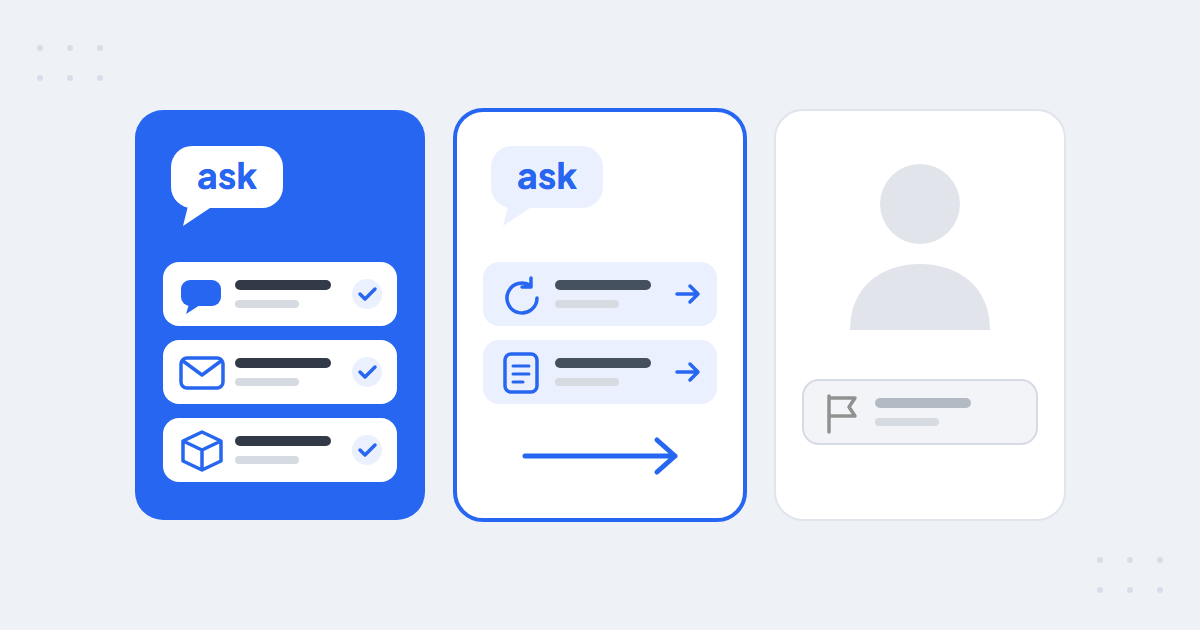
- “AI chatbot for e-commerce” covers two different jobs – selling (product discovery, recommendations, checkout) and supporting (orders, returns, tickets). Most tools are strong at one, not both.
- Support-led tools (Intercom Fin, Zendesk, Ada, Gorgias, Yuma) resolve tickets well but do little product discovery. Sales-led tools (Rep AI, Zowie) do the opposite.
- Pricing models are not comparable at face value – per-seat, per-resolution, per-conversation and flat plans all appear below. Read the model, not the headline number.
- Very few tools do all four jobs well – selling, agentic actions, support and analytics. Most specialise on one side of the sell/support line; the comparison table below shows how far each tool reaches, so you can match one to your store.
What a good e-commerce AI chatbot actually does
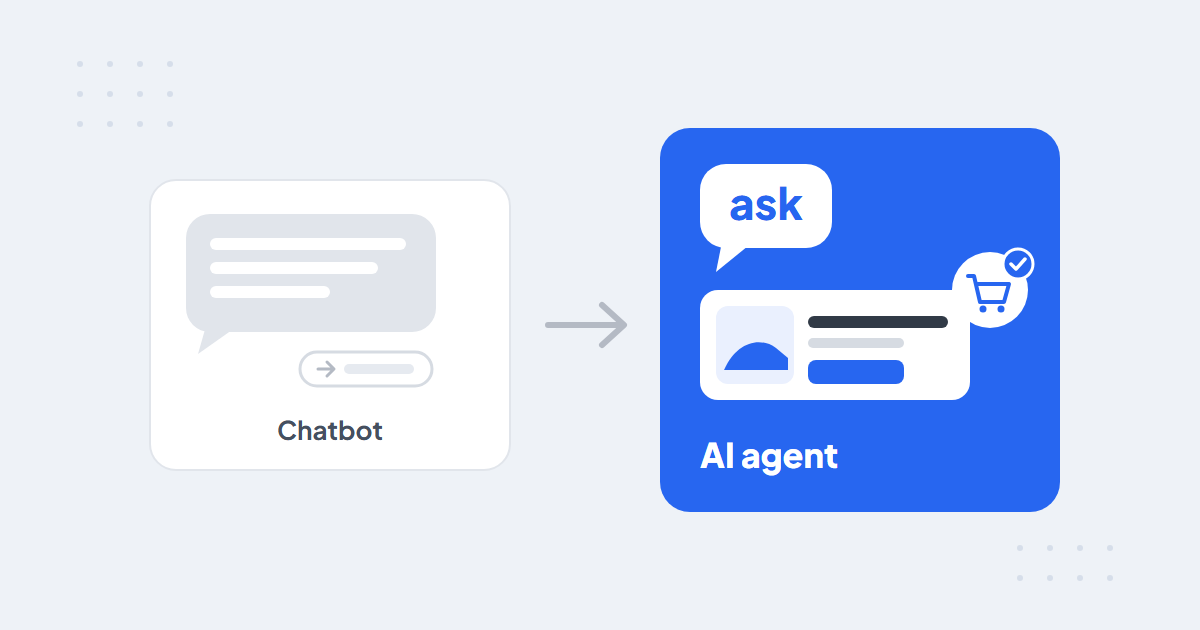
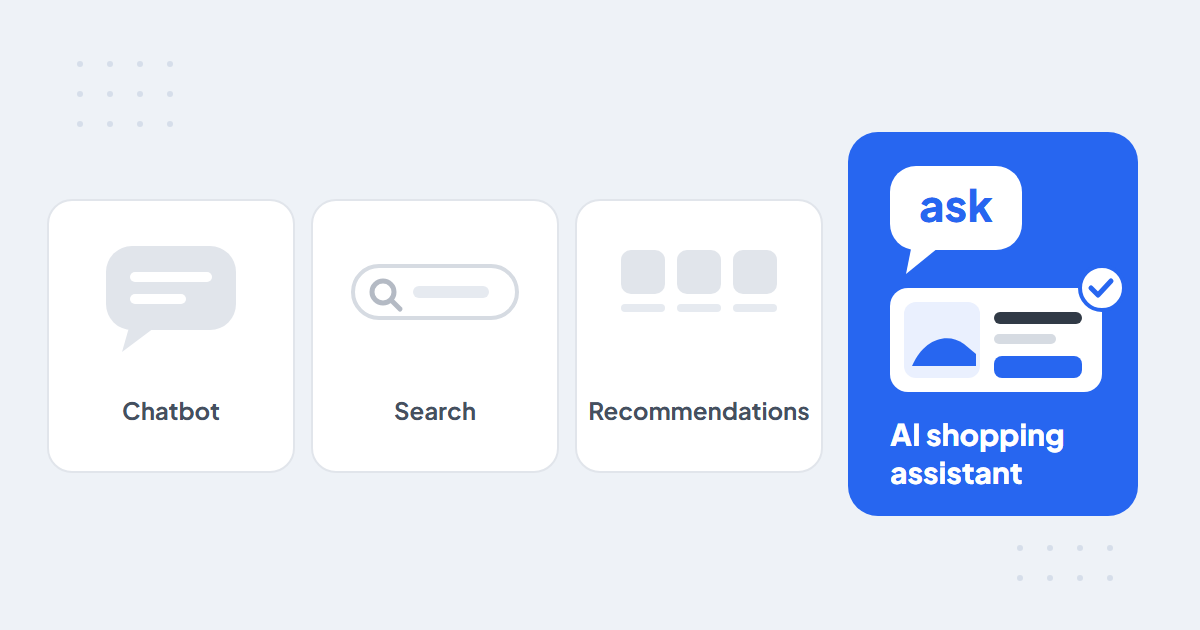
The phrase hides two very different products. One is a seller: it reads your catalogue, understands “I need over-ear headphones for the office under €150”, recommends the right products and helps the shopper buy. The other is a support agent: it answers “where is my order”, processes returns and deflects tickets. A shop usually needs both, but most tools were built for one side of that line – which is why a fair comparison has to look past the “AI chatbot” label – see how an AI agent differs from a chatbot – and ask what the tool is really for. The strongest option is an AI built for e-commerce that does both jobs on the same catalogue and order data.
How we compared these e-commerce AI chatbots
Every tool below was checked against its own public product, pricing and documentation pages in September 2026. We scored fourteen capabilities that matter to an online store – conversational product search, visual and agentic selling, order handling, helpdesk automation, grounding against hallucination, analytics, channels and marketplace reach – plus the languages each covers. A tick means the vendor documents the feature; a tilde means it is limited or partial; a dash means it is not advertised. Where a number is quoted (languages, price) it comes from the vendor’s own page. AskSpot is our own product; we scored it against the same rubric, so read the table, not our adjectives.
The 11 best e-commerce AI chatbots in 2027
AskSpot – AI Chat and Inbox Agent for e-commerce

- Capabilities: 13 of 16
- G2 Rating: 5.0 ★
- Pricing: from €250/mo ($290) for 1,250 conversations, then €0.18 ($0.22) each; no per-seat fees – estimate your cost
The only tool here strong across all four jobs at once. One Agent runs conversational and photo product search with in-chat cards and a Copilot that fills the cart and walks the shopper to checkout, then handles the orders, returns and tickets after the sale – on the site and inside marketplace and helpdesk inboxes.
Who it’s for: E-commerce stores that want one Agent to both sell and support, in the shopper’s language.
Where it’s strong
- Sells and supports on the same catalogue and order data
- Photo search, virtual try-on and a Copilot that completes checkout
- Marketplace inboxes (Allegro, Amazon) and 200+ languages
- GDPR-compliant on Azure OpenAI; revenue attributed to chat
Limitations
- Web, email and marketplace inboxes today – WhatsApp and Instagram channels are in progress
- No native helpdesk suite (macros, agent seats) – it hands the full conversation and a summary to your connected helpdesk instead
- A younger brand than the incumbents
Alhena – AI shopping and support agent

- Capabilities: 10 of 16
- G2 Rating: 4.9 ★
- Pricing: from $239/mo (€221) for 200 conversations, $1.20 (€1.11) per conversation over; Scale $1,199 (€1,110) for 1,200
Formerly Gleen, and the tool closest to AskSpot’s own remit: a catalogue-aware shopping assistant that also auto-resolves around 80% of support, grounded in live store data, with a built-in AI-search-visibility (AEO/GEO) layer that tracks how your products surface inside ChatGPT and Perplexity.
Who it’s for: Shopify brands that want a grounded shopping-and-support agent and care about AI-search visibility.
Where it’s strong
- Sells and supports, hallucination-free on live store data
- Proactive nudges, order tracking and returns, full revenue attribution
- Unique built-in AEO/GEO visibility layer; luxury logos (Victoria Beckham, Tatcha)
Limitations
- Shopify- and US-first: no Allegro / Amazon inbox, no EU-hosting or GDPR-on-Azure story
- Pricey at volume, and plans bundle the AI-visibility product, so the headline price isn’t purely the Chat Agent
Full comparison: AskSpot vs Alhena →
Rep AI – AI sales and support agent

- Capabilities: 9 of 16
- G2 Rating: 4.9 ★
- Pricing: from €11 ($12)/mo; priced per session + catalog size (Shopify), with Sales, Support and Concierge sold as separate modules – quoted per session, not per conversation, so it doesn’t line up cleanly with the others’ rates
The other tool here that genuinely does both jobs – a Shopify-first “agentic commerce” platform whose behavioural AI reads a shopper’s session, starts a contextual conversation, answers product questions and guides the purchase, then resolves the support that comes after. Structurally the closest mirror to AskSpot’s chat-and-inbox split.
Who it’s for: Growth-stage Shopify / Shopify Plus DTC brands with high traffic and large catalogues.
Where it’s strong
- Sells and supports from one Agent, sold as Sales, Support or a combined Concierge
- Behaviour-triggered conversations, cart recovery and revenue attribution
- Photo-upload virtual try-on; deep Shopify + Klaviyo / Gorgias ecosystem
Limitations
- Shopify- and US-first: no marketplace inbox (Allegro / Amazon), no EU-hosting story
- Quoted per session (not per conversation) and catalogue-capped per tier, so the real cost depends on your traffic-to-chat rate and climbs in busy months
- Grounding leans on the catalogue rather than a documented anti-hallucination guardrail
Full comparison: AskSpot vs Rep AI →
Intercom Fin – AI support agent

- Capabilities: 11 of 16
- G2 Rating: 4.5 ★
- Pricing: $0.99 (€0.92) per outcome, on top of an Intercom seat
The strongest pure support-automation agent here; on Shopify it syncs the catalogue, shows product cards and handles checkout in-conversation, and resolves refunds, returns and address changes autonomously.
Who it’s for: Product-led and SaaS-style businesses already standardising on Intercom.
Where it’s strong
- Outcome pricing – you pay only when Fin resolves a case
- Autonomous refunds, returns and address changes
- Works on non-Intercom helpdesks too
Limitations
- Product discovery narrower than a sales-first tool
- Best inside the Intercom suite; the bill is hard to predict by resolution volume
Full comparison: AskSpot vs Intercom Fin →
Zendesk – AI agents for customer support

- Capabilities: 8 of 16
- G2 Rating: 4.3 ★
- Pricing: from $55 (€51) per agent/month, with per-resolution AI billed on top
The obvious AI add-on if your support already runs on Zendesk: mature ticketing and triage, a real sandbox, 80 languages at native fluency, and enterprise compliance and data residency.
Who it’s for: Larger support desks layering AI onto an existing Zendesk operation.
Where it’s strong
- Mature ticketing, triage and data residency
- Safe sandbox to test changes before they go live
- 80 languages at native fluency
Limitations
- Grounds in the help centre, not a product feed – little merchandising
- No built-in revenue or conversion attribution
Full comparison: AskSpot vs Zendesk →
Zowie – enterprise AI shopping agent

- Capabilities: 10 of 16
- G2 Rating: 4.7 ★
- Pricing: Custom / enterprise, per-conversation (quote only)
Of the enterprise names, closest to a true shopping agent: it grounds recommendations in your catalogue and merchandising rules, adds to cart in chat, and runs actions deterministically – a policy is followed the same way every time, not left to the model’s mood.
Who it’s for: Enterprise retailers that need governed, auditable automation.
Where it’s strong
- Catalogue-grounded recommendations with an in-chat cart
- Deterministic, policy-controlled actions
- Publishes conversion and AOV lifts; 175+ languages across voice and chat
Limitations
- Enterprise contracts, no public rate card
- Helpdesk / inbox side lighter than the support-first tools
Full comparison: AskSpot vs Zowie →
Gorgias – AI agent on an e-commerce helpdesk

- Capabilities: 8 of 16
- G2 Rating: 4.6 ★
- Pricing: from €37 ($40)/month + €1.39 ($1.50) per extra AI interaction
The e-commerce helpdesk of choice for support-heavy stores; its AI Agent sits on mature ticketing – macros, rules and order actions like refunds, subscription edits and shipping changes are first-class.
Who it’s for: Stores whose centre of gravity is support and post-purchase operations.
Where it’s strong
- First-class refunds, subscription edits and shipping changes
- Recommends and upsells in chat; priced per resolution, never per agent
- 300+ integrations (Shopify, Magento, BigCommerce, WooCommerce)
Limitations
- No photo search, virtual try-on or full copilot checkout
- Built around the ticket, not the shopping journey
Full comparison: AskSpot vs Gorgias →
Yuma AI – AI support agent for helpdesks

- Capabilities: 7 of 16
- G2 Rating: 4.8 ★
- Pricing: from $14,400 (€13,300) a year – annual commitment only, paid upfront; 12,000 resolutions (~$1.20 each); first 30 days free
A support-first agent that layers onto the helpdesk you already run – Gorgias, Zendesk, Kustomer, Gladly, Front or Re:amaze – and auto-resolves WISMO, returns, refunds and subscription changes end to end. A newer sales widget adds pre-purchase Q&A and add-to-cart, but the centre of gravity is the ticket queue.
Who it’s for: Shopify / DTC brands with high support volume already on a major helpdesk.
Where it’s strong
- Deep ticket automation across the major helpdesks, priced only on resolved tickets
- Multi-model quality checks that escalate low-confidence replies to a human
- Instagram, Facebook and WhatsApp DMs; 180+ languages
Limitations
- Needs an existing helpdesk – it is a layer, not a helpdesk or a storefront agent
- Selling is a bolt-on: product discovery is Q&A-led, no photo search or checkout copilot
- The entry plan is billed annually (12,000 resolutions a year), so it suits steady, higher-volume support more than a small or spiky queue
Full comparison: AskSpot vs Yuma AI →
Tidio (Lyro) – AI support chatbot

- Capabilities: 10 of 16
- G2 Rating: 4.6 ★
- Pricing: free tier; from €39 ($42)/month + base plan, AI billed per conversation
Where most small and mid-sized stores begin: installs in minutes, has a free tier, and handles real order actions plus catalogue-based recommendations.
Who it’s for: Smaller stores that want affordable, capable support automation without a big rollout.
Where it’s strong
- Free tier; installs in minutes
- Order status, cancels, refunds and returns
- Testing sandbox plus resolution / CSAT reporting
Limitations
- Support-and-FAQ first, not open-ended discovery or autonomous checkout
- The AI is a per-conversation add-on on a helpdesk plan – the main reason stores start looking for a Tidio alternative
Full comparison: AskSpot vs Tidio →
Ada – enterprise CX AI agent

- Capabilities: 6 of 16
- G2 Rating: 4.6 ★
- Pricing: Custom / enterprise (~$30k/year and up)
An enterprise customer-service platform with a strong voice-AI story; for e-commerce it automates the post-purchase queue – tracking, returns and exchanges – but it doesn’t sell.
Who it’s for: Large, compliance-heavy brands that want voice-first support automation.
Where it’s strong
- Open-ended voice with mid-call human handoff, full context
- SOC 2, GDPR and HIPAA; 60 languages across 8+ channels
- Automates order tracking, returns and exchanges
Limitations
- No product discovery, in-chat cart or revenue attribution
- Connects to CRMs and helpdesks, not shopping platforms; quote-only (~$30k/yr+)
Full comparison: AskSpot vs Ada →
Smartsupp – live chat with an AI advisor

- Capabilities: 4 of 16
- G2 Rating: 4.7 ★
- Pricing: free tier; Mira AI from €19 ($20)/month, priced per conversation
An EU-hosted live-chat tool with “Mira”, an AI shopping assistant that recommends, cross-sells and up-sells and hands off to a human on conditions you set.
Who it’s for: Budget-conscious European stores that want live chat with a capable AI advisor on top.
Where it’s strong
- EU-hosted, genuinely affordable, free tier
- Mira recommends and cross- / up-sells from your feed
- Speaks the major European languages
Limitations
- Mira advises, it doesn’t act – no add-to-cart, order status or returns
- No marketplace inbox
Full comparison: AskSpot vs Smartsupp →
A closer look at AskSpot
What separates AskSpot in practice is that the shopper never hits a wall. Ask for a product in plain language – or by photo – and the Agent searches the live catalogue, compares options and shows real product cards the shopper can add to the cart without leaving the chat. The same brain then handles the order questions and returns that come after the sale, on the website and inside marketplace and helpdesk inboxes.
 spot
spotSee it on your own catalog
Book a short demo and we’ll run AskSpot on products from your store.
E-commerce AI chatbot feature comparison
Split into three areas – selling, support & reach, and general functions:
Selling
| Capability | AskSpot | Alhena | Rep AI | Intercom Fin | Zendesk | Zowie | Gorgias | Yuma | Tidio | Ada | Smartsupp |
|---|---|---|---|---|---|---|---|---|---|---|---|
| Product search & recommendation | ✓ | ✓ | ✓ | ✓ | ~ | ✓ | ✓ | ~ | ✓ | – | ✓ |
| Visual search by photo | ✓ | – | – | – | – | – | – | – | – | – | – |
| In-chat product cards + add-to-cart | ✓ | ~ | ✓ | ✓ | – | ✓ | ~ | ~ | ~ | ~ | ~ |
| Agentic checkout / copilot | ✓ | ~ | ~ | ✓ | ~ | ✓ | ~ | – | – | ~ | – |
| Proactive messages & cart recovery | ✓ | ✓ | ✓ | ✓ | ✓ | ✓ | ~ | ~ | ✓ | ✓ | ~ |
| Virtual fitting room / visualization | ✓ | ~ | ✓ | – | – | – | – | – | – | – | – |
| Revenue / conversion analytics | ✓ | ✓ | ✓ | ~ | – | ✓ | ✓ | ✓ | ✓ | – | ✓ |
Support & reach
| Capability | AskSpot | Alhena | Rep AI | Intercom Fin | Zendesk | Zowie | Gorgias | Yuma | Tidio | Ada | Smartsupp |
|---|---|---|---|---|---|---|---|---|---|---|---|
| Order tracking (WISMO), cancels & returns | ✓ | ✓ | ✓ | ✓ | ✓ | ✓ | ✓ | ✓ | ✓ | ✓ | – |
| Helpdesk / Inbox Agent | ✓ | ✓ | ✓ | ✓ | ✓ | ~ | ✓ | ✓ | ✓ | ~ | ~ |
| Full helpdesk suite (macros, SLAs, agent seats) | – | ~ | ~ | ✓ | ✓ | ~ | ✓ | – | ✓ | ~ | ~ |
| Social / messaging channels (WhatsApp, Instagram) | soon | ✓ | ✓ | ✓ | ✓ | ✓ | ✓ | ✓ | ✓ | ✓ | ~ |
| Marketplace inbox (Allegro, Amazon) | ✓ | – | – | – | ~ | – | – | – | – | – | – |
General functions
| Capability | AskSpot | Alhena | Rep AI | Intercom Fin | Zendesk | Zowie | Gorgias | Yuma | Tidio | Ada | Smartsupp |
|---|---|---|---|---|---|---|---|---|---|---|---|
| Grounded, low-hallucination answers | ✓ | ✓ | ~ | ✓ | ✓ | ✓ | ~ | ✓ | ✓ | ✓ | ~ |
| Knowledge base | ✓ | ✓ | ✓ | ✓ | ✓ | ✓ | ✓ | ✓ | ✓ | ✓ | ✓ |
| Onboarding & human support | ✓ | ✓ | ~ | ✓ | ✓ | ✓ | ✓ | ✓ | ~ | ✓ | ~ |
| Languages (built-in) | 200+ | 90+ | all | dozens | 80 | 175+ | 80+ | 180+ | 45+ | 60 | EU |
| Free tier | – | ✓ | ~ | – | – | – | – | – | ✓ | – | ✓ |
No single tool wins every row. AskSpot covers the most – 13 of the 16 capabilities we scored – but it trails on social / messaging channels (in progress) and a no-code visual builder, and it hands full helpdesk work to your connected system rather than replacing it. The support-led agents do little selling; match a tool to the jobs you actually need.
How much do e-commerce AI chatbots cost?
Prices below are entry-level and the models are not directly comparable – per-seat, per-resolution, per-conversation and flat plans all appear. Read the “what you get” column, not the headline number.
| Tool | Entry price | Model / what you get |
|---|---|---|
| AskSpot | from €250/mo ($290) | 1,250 conversations included, €0.18 ($0.22) per extra; no per-seat fees, unlimited dashboard users |
| Alhena | from €221/mo ($239) | 200 conversations included, €1.11 ($1.20) per extra; per-conversation, Shopify/US-first, bundles an AI-visibility add-on |
| Rep AI | from €11 ($12)/mo | Per session, catalogue-capped per tier (Shopify): Sales 3k €11 ($12) · 25k €194 ($209) · 50k €341 ($368); Concierge (Sales + Support) 25k €244 ($263) · 50k €428 ($462). Quoted per session, not per conversation. |
| Intercom Fin | €0.92 ($0.99) / outcome | Pay only when Fin resolves (or completes a designed handoff), on top of an Intercom seat from €27 ($29)/mo |
| Zendesk | from €51 ($55) / agent/mo | Per seat, billed yearly, with per-resolution AI billed on top – rate not published |
| Zowie | Custom / enterprise | Per-conversation, “pay for resolutions, not seats”; quote only (its AWS Marketplace listing: ~$34,500/year for 25,000 conversations) |
| Gorgias | from €37 ($40)/mo + ~€1.39 ($1.50) / extra AI interaction | Ticket-tiered helpdesk, never priced per agent |
| Yuma AI | from €13,300 ($14,400)/year | Per resolution: ~€1.11 ($1.20) per resolved ticket, 12,000 resolutions a year; annual commitment only, paid upfront; 30 days free, layers on your helpdesk |
| Tidio (Lyro) | from €39 ($42)/mo + base plan | Lyro AI billed per AI conversation on top of a Tidio plan (Starter €29 / $31); €700 ($756)/mo for 1,000 |
| Ada | Custom / enterprise | Quote only, roughly €28k ($30k)/year and up |
| Smartsupp | from €19 ($20)/mo | Mira AI Agent priced per 100 conversations; live-chat plans (from €22 / $24 monthly) are only needed for other channels |
Watch the cost per resolution, not the sticker price. AskSpot’s bundle works out near €0.20 ($0.23) a conversation (€250 / $290 for 1,250) – well under the €0.92–€1.39 ($0.99–$1.50) the per-resolution tools charge per resolved case. There are no per-seat fees either, so the whole team can use it.
To make that concrete, here is the all-in monthly cost at two volumes – 1,000 and 2,000 AI conversations:
| Tool | ~1,000 conv / mo | ~2,000 conv / mo | Model |
|---|---|---|---|
| AskSpot | €250 ($290) | ~€385 ($455) | Per-conversation, add-to-cart & checkout, unlimited seats |
| Alhena | ~€1,110 ($1,199) | ~€2,000 ($2,159) | Per-conversation; Shopify/US-first, no marketplace inbox |
| Rep AI | ~€244 ($263) | ~€428 ($462) | Sales + Support, priced per website session; Shopify-first |
| Tidio (Lyro) | ~€700 ($756) + base | ~€1,400 ($1,512) + base | Support-first, no autonomous checkout |
| Intercom Fin | ~€950 ($1,019) | ~€1,865 ($2,009) | Per outcome, incl. one Intercom seat |
| Gorgias | ~€1,635 ($1,765) | ~€3,025 ($3,265) | Per-resolution AI |
| Yuma AI | ~€1,110 ($1,200) | ~€1,850 ($2,000) | Per resolution; annual commitment (Starter = 12k resolutions/yr) |
| Ada | ~€2,315 ($2,500) | ~€2,315 ($2,500) | Enterprise, quote only – third-party estimate |
| Zowie | ~€2,660 ($2,875) | ~€2,660 ($2,875) | Enterprise, quote only – estimate from its AWS Marketplace listing |
| Smartsupp | ~€185 ($200)* | ~€370 ($400)* | Advises only – no add-to-cart or order actions |
The bottom line: which e-commerce AI chatbot to choose
Read it by the job you need done:
- Sell and support in one, across web, email and marketplaces: AskSpot covers the most of the fourteen capabilities (11), including photo search, a checkout copilot and Allegro / Amazon inboxes, at the lowest cost per conversation. Alhena is the closest all-rounder and adds a unique AI-search-visibility layer, but it is Shopify- and US-first and pricier. Rep AI is the other agent that genuinely both sells and supports (as separate Sales and Support modules, like AskSpot’s Chat and Inbox) – sales-led and strong on Shopify – but likewise Shopify-first, with no marketplace inbox.
- Support-first, already on a helpdesk: Intercom Fin, Gorgias, Zendesk and Yuma AI extend your existing stack with strong ticket automation, macros and SLAs; they resolve well but do little product discovery.
- Enterprise, voice-first or compliance-driven: Zowie for governed, deterministic commerce automation; Ada for voice-led, compliance-heavy support.
- Small budget or a free start: Tidio and Smartsupp have free tiers and low entry prices – Tidio takes real order actions, Smartsupp advises rather than acts.
If your priority is one Agent that both sells and supports on your own catalogue and order data, that is where AskSpot is built to lead – and here is how it plays out in live stores:
up to 22%
of chats end in a purchase (Konesso)
up to 88%
of chats resolved with no human (Konesso)
56k+
shopper chats across 4 marketplaces (PHH Group)
See the detail: Konesso turned conversations into purchases, PHH Group answers four Baltic marketplaces in the shopper’s language, and Morele.net runs chat and a marketplace inbox together.
Frequently asked questions
What is the best AI chatbot for e-commerce?
It depends on the job. For stores that want to both sell (product discovery, recommendations, checkout) and support (orders, returns, tickets) in one tool, AskSpot scores highest on our 11-capability rubric. The support-led and free-tier options each carry trade-offs – compare the strengths, limits and pricing above and pick for your priority.
What is the difference between an AI chatbot and an AI agent for e-commerce?
A chatbot answers questions. An AI agent also takes action – searching the catalogue, adding to the cart, checking an order, processing a return. The tools in this comparison that can act, not just reply, are the ones marked for agentic checkout and order handling.
Which AI chatbot works with WooCommerce, Shopify and Magento?
AskSpot integrates with Shopify, WooCommerce, Magento, PrestaShop, Shoper, IdoSell, AtomStore and more, plus Allegro and Amazon inboxes. Most support-led tools connect to Shopify first; check each vendor’s integrations page for your exact stack.
How much does an e-commerce AI chatbot cost?
Models vary widely: per seat (€27–€51 / $29–$55 an agent at Intercom and Zendesk), per resolution or outcome (around €0.92–€1.39 / $0.99–$1.50), per website session (Rep AI), per conversation, or flat plans with usage. AskSpot starts at €250/month ($290) for 1,250 conversations with no per-seat fees; per-conversation shopping agents like Alhena start at €221 ($239) a month for 200 conversations; enterprise tools like Ada and Zowie are quote-only.
Can an AI chatbot handle customer support in multiple languages?
Yes. Language coverage ranges from around 45 to 200+. AskSpot answers in 200+ languages from one Agent, switching to the shopper’s language automatically, which matters for stores selling across several markets.