Key takeaways
- Most shoppers arrive undecided, and they leave when no one answers their product questions.
- The real barrier to buying online is uncertainty, not price.
- AI works like a sales assistant – it compares products and recommends the right one in real time.
- It guides the whole purchase journey, not just isolated answers, and that is what lifts conversion.
The problem the industry knows but rarely solves
E-commerce has become one of the most competitive spaces in digital business. Stores pour significant budgets into marketing, performance campaigns, and traffic acquisition. Yet despite growing visitor numbers, conversion remains the stubborn challenge no one wants to talk about.
The reality is straightforward: most shoppers don’t arrive with a decision already made. They’re comparing options, weighing features, trying to figure out which product actually fits their needs. In a physical store, a sales assistant bridges that gap – shoppers can ask questions, compare products side by side, and get a recommendation before they commit. Online, they’re left alone with hundreds of products and no one to guide them. That’s where the problem starts.
What online shoppers are actually looking for
Most customer conversations in online stores have nothing to do with shipping or returns. Shoppers ask about products. Specifically, they want to know:
- which product to choose when faced with several options
- how two specific models actually differ
- whether a product is right for their particular situation
If they can’t get a quick answer, they leave.
The biggest barrier to buying online isn’t price – it’s uncertainty.
up to 29%
of chats add an item to the cart
up to 21%
of chats end in a purchase
up to 80%
of chats resolved with no human
Top-of-range figures across the e-commerce stores running AskSpot.
How AI acts as a digital sales assistant
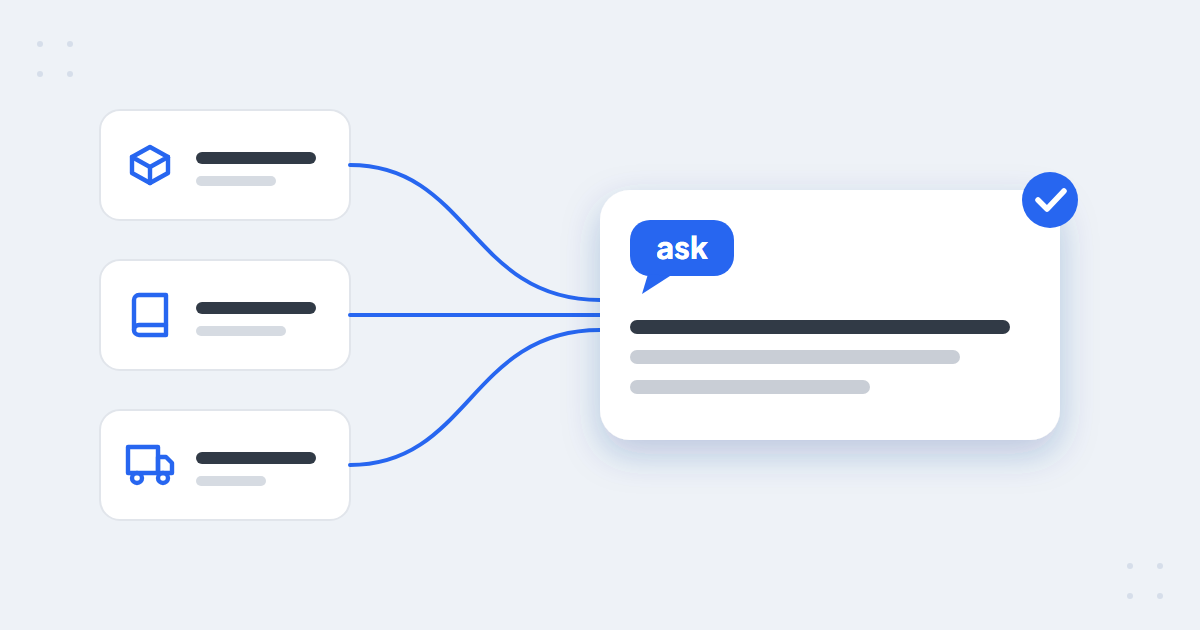
An AI sales agent built for e-commerce can analyze a product catalog, understand shopper questions, and recommend the right products in real time. Instead of clicking through page after page, a shopper can simply ask:
- “Which laptop is best for graphic design?”
- “What’s the difference between these two models?”
- “What would you recommend for a beginner?”
AI can instantly compare products, surface the most relevant options, and explain the key differences – creating an experience that closely mirrors shopping in a physical store. There’s a simple truth in sales: people rarely buy when they’re confused. They buy when they feel confident. AI builds that confidence through clear answers and relevant recommendations.
 spot
spotSee this on your own catalog
Book a short demo – we’ll show AskSpot on products from your store.
AI as part of the purchase journey, not just a chatbot
The real difference between a basic chatbot and an AI built for e-commerce is this: one answers questions, the other guides the entire purchase journey. Rather than pointing shoppers back to filters and category pages, AI walks them through the process – from the first question, through product comparison, all the way to the moment they add something to their cart knowing it’s the right choice.
Conversion isn’t just about driving traffic. It’s about helping shoppers make decisions. AI makes that possible at scale.
The future of online retail is smarter conversations
As e-commerce continues to evolve, one thing is becoming clear: the future of online retail isn’t just automation – it’s smarter conversations that help shoppers buy with confidence. By combining product knowledge, conversation context, and intelligent recommendations, AI can replicate the role of a trusted sales assistant – available to every shopper, at any time.
See what this looks like in practice: Konesso turned 16.2% of conversations into purchases, Militaria.pl reached a 48% recommendation CTR, and Morele.net cut customer service costs by 90%.