Key takeaways
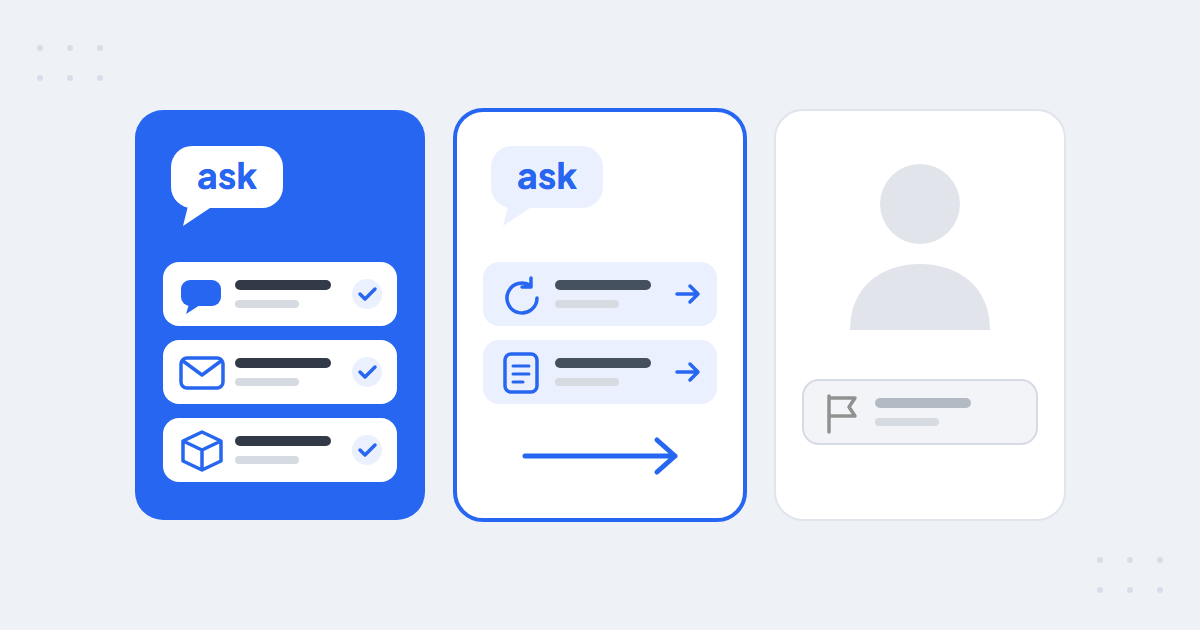
- A chatbot answers questions. An AI agent answers and then acts – it looks things up in your systems and takes the next step for the customer.
- In a store, “acting” means advising from the catalogue, checking compatibility, adding to the cart and handling orders – not just pointing to a help page.
- An agent stays accurate when it answers only from your catalogue and your content, and hands over to a person when it shouldn’t answer.
- A scripted chatbot is still enough for a small store with a few repetitive questions and no product advice to give.
What is the difference between an AI agent and a chatbot?
A chatbot is built to hold a conversation: it takes a question and returns an answer. An AI agent is built to get something done: it works out what the customer is trying to achieve, uses the tools and data it has access to, and takes the steps needed – then reports back in the same conversation.
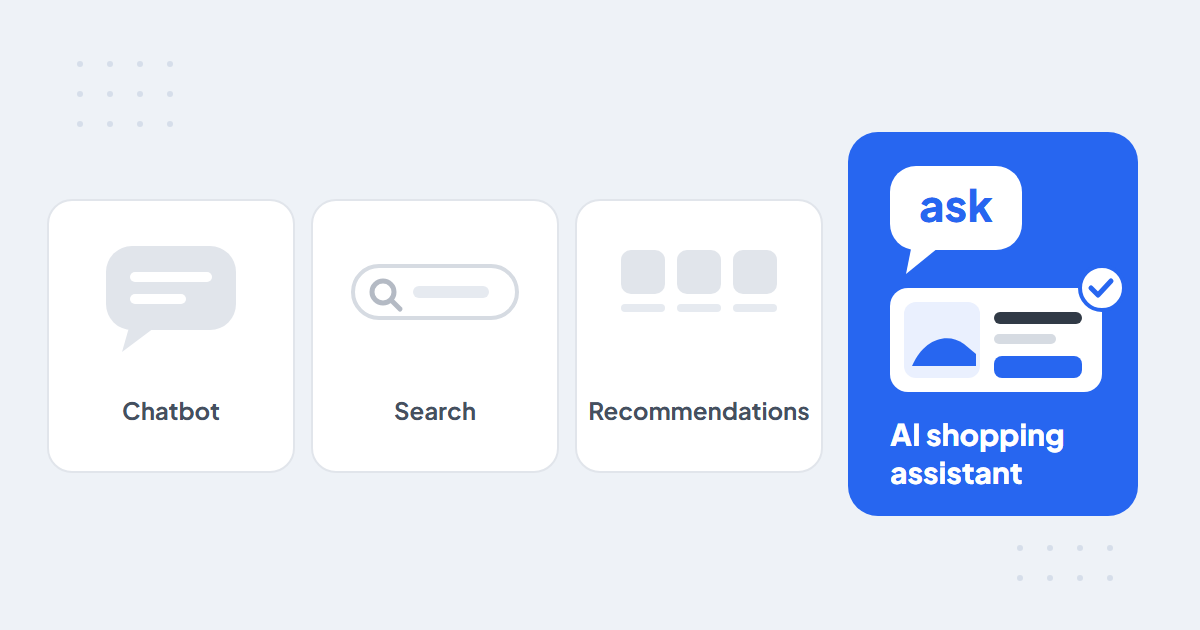
The terms overlap because chat tools have evolved in three steps, and all three are still on the market:
- Scripted chatbot – follows decision trees and buttons someone built by hand. It only understands what it was set up for.
- AI chatbot – uses a large language model, so it understands free text and answers in natural language from whatever it has been given – help centre, FAQ, website pages, documents – and, unless restricted, from the model’s general knowledge.
- AI agent – an AI chatbot connected to your systems and allowed to act: it decides what it needs to look up – the catalogue, store content, the customer’s order – checks more than one source when the first isn’t enough, then carries out the next step.
So the useful question isn’t what a vendor calls its product. It’s what the tool can reach and what it is allowed to do once it understands the customer.
AI agent vs. chatbot: side by side
Here is how the three compare on the things that matter in an online store:
| Scripted chatbot | AI chatbot | AI agent | |
|---|---|---|---|
| Understands free text | Only expected phrases and buttons | Yes | Yes |
| Answers from | Pre-written replies | The content and data it’s connected to – FAQ, help centre, web pages, catalogue | The content and data it’s connected to – FAQ, help centre, web pages, catalogue |
| Finds information | Follows the script | Retrieves from its knowledge base in one step | Chooses which sources to check and looks further when it needs to |
| Product advice | No | Generic, if any | Specific products, compared for this shopper |
| “Will it fit / is it compatible?” | No | Rarely reliable | Checked against product specs |
| Order status | Link to a tracking page | General shipping policy | Looks up the actual order after verifying the customer |
| Takes actions | No | No | Adds to cart, fills forms, forwards a complete request |
| Handover to a person | Fixed exit button | Often when stuck | By rule, with the full context passed on |
The jump that matters most is the last column. An AI chatbot can describe your returns policy beautifully and still leave the shopper to find the right product, the right size and the cart button alone.
What an AI agent does in an online store
Most store chat is about buying. Across more than 240,000 conversations handled by AskSpot’s AI Chat Agent, pre-purchase questions are the majority in most categories – which product, which size, will it fit. That’s where an agent earns its place. In practice it does four jobs a chatbot can’t:
1. Advises from your catalogue
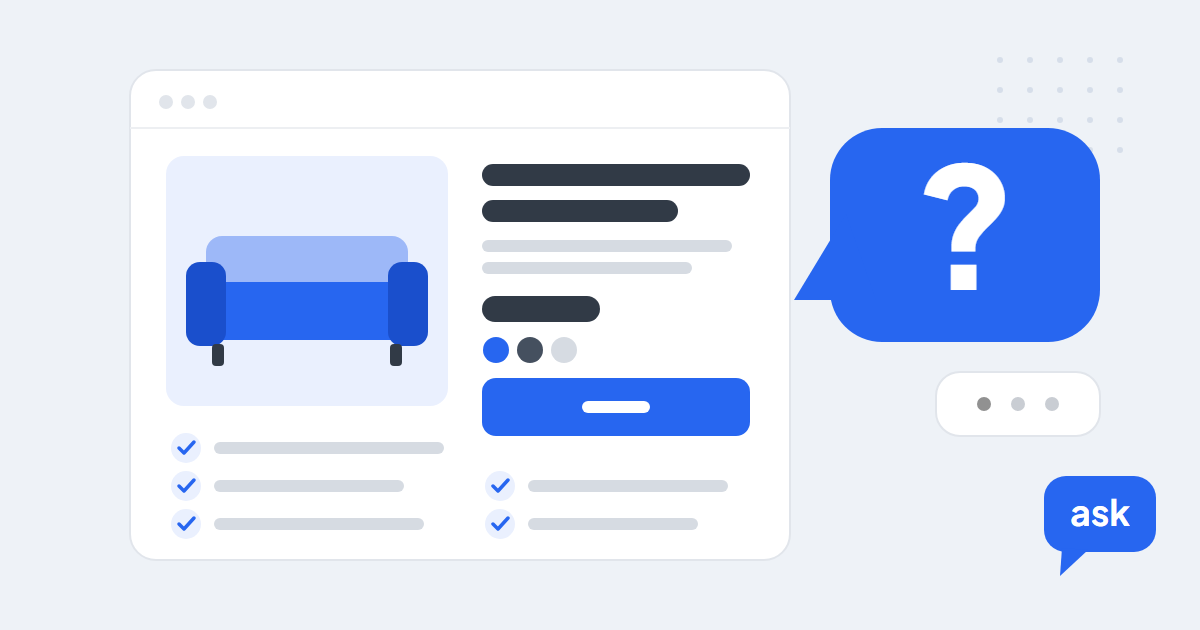
The shopper describes a need in their own words, the agent asks what it still needs to know, then recommends specific products from your range and explains why they fit. It searches by meaning, so “something warm for hiking in March” works without the right keyword. More in AI product search and the AI shopping assistant.
2. Checks fit and compatibility
“Does this filter fit my machine?”, “will this rack fit my car?”, “is this part right for my bike’s engine?” These questions stop a sale more often than price does. An agent checks them against the product data instead of sending the shopper to a spec sheet – which is why it matters so much in categories like motorcycle parts, where the answer depends on model, year and engine.
3. Acts on the page
Once the shopper decides, the agent can add the right variant to the cart and, in a hands-on setup, set filters, move to the right category and fill in checkout details – with the shopper watching and confirming the payment. See it on a live store in the AI assistant that clicks for your customer.
4. Handles orders
After the sale, the agent answers “where is my order?” with the real status, carrier and delivery date, pulled from your store platform after the customer confirms the order number and email. For changes, cancellations or returns it collects the details and forwards a complete request to your team. How that works is covered in can AI handle “where’s my order?” and on the order tracking page.
 spot
spotSee an AI agent on your own catalogue
Book a short demo – we’ll show the Agent advising, checking fit and adding products from your store.
Doesn’t an AI agent make things up?
It can, if it is allowed to answer from general knowledge. A language model on its own will fill gaps with something plausible – a size that doesn’t exist, a delivery promise you never made. An agent that takes actions makes that risk worse, not better, so the safeguards matter more than the model:
- Grounded answers. Products come only from your catalogue, synced from your product feed – daily by default – and policies only from your own pages and Q&A in the knowledge base.
- Live data where it counts. Order status is fetched from the store platform at the moment the customer asks, not guessed.
- Your rules. Scenarios written in plain language tell the agent how to handle specific cases, through actions and automations.
- Checks before data. No order details until the customer confirms the order number and purchase email.
- A clear exit. When a question isn’t one it should answer – health advice, a disputed refund – it hands over to a person with the conversation attached.
- Tested before it goes live. Every reply is checked automatically against your catalogue and rules, our specialists challenge it with the hardest questions, your managers try it end to end on a private staging environment – and if you want extra reassurance, you can launch it after hours first.
Does the difference show up in sales?
It does, because a chat that can recommend and add to cart sits directly on the path to the order. Two published results from stores running AskSpot’s Chat Agent:
up to 21.6%
of chats end in a purchase
Konesso · AskSpot Case Studies
up to 30.6%
of chats add an item to the cart
GadziSklep · AskSpot Case Studies
240,000+
shopper conversations across 15 e-commerce categories
AskSpot Internal Data · 48 stores
At Konesso, a specialty coffee store, shoppers ask which beans suit their taste and which filter or gasket fits their machine. At GadziSklep, a terrarium and exotic-pet store, they ask what a specific animal needs. Both are questions a scripted chatbot can only answer with a link. These are rates among shoppers who chatted, not the stores’ overall conversion rates.
When a simple chatbot is enough
Not every store needs an agent. A scripted or FAQ chatbot can be the right choice when:
- the catalogue is small and products need no explaining;
- almost all questions are the same handful – opening hours, delivery cost, returns address;
- you sell in one language and have someone to pick up anything unusual during working hours.
The case for an agent grows with the number of products, the number of “which one / will it fit” questions and the number of markets and hours you need to cover. If you’re comparing tools, our roundup of the best AI chatbots for e-commerce scores 11 of them on product advice, actions and price, and our guide what is an AI shopping assistant covers the selling side in more depth.
FAQ
What is the main difference between an AI agent and a chatbot?
A chatbot answers questions in a conversation. An AI agent also acts on them: it uses connected data and tools – the catalogue, order records, the cart – and takes the next step for the customer, then reports back in the same chat.
Is ChatGPT an AI agent or a chatbot?
In everyday use ChatGPT is an AI chatbot: you ask, it answers. OpenAI has added agent features that can browse and complete tasks, but those work on the open web for the user. A store’s AI agent works the other way round – only with that store’s products, orders and rules.
Are AI agents just better chatbots?
Partly. An agent usually starts as an AI chatbot, but it is connected to your systems and allowed to act. That changes the result of a conversation: instead of an answer and a link, the shopper gets a checked recommendation, an order status or a product in the cart.
Is an AI agent safe to let near my orders and cart?
It should be built that way: answers grounded in your own catalogue and content, order details shown only after the customer verifies the order number and email, the payment always confirmed by the shopper, and a handover to your team for anything outside its rules.
How much does an AI agent for e-commerce cost?
Most tools charge per conversation or per resolution rather than per seat. AskSpot’s Chat Agent starts at €250 a month for up to 1,250 conversations, with no setup fee and a 7-day free trial – see pricing for the full rate card.