Key takeaways
- An AI support agent reads a ticket, looks up the order, and replies or acts – it doesn’t just suggest an FAQ article. Every tool below does this; they differ in where they run and how far they go.
- There are three shapes: agents built into a helpdesk (Gorgias, Zendesk, Intercom), agents that sit on top of the helpdesk you already have (Siena, Yuma, eesel, AskSpot) and enterprise platforms sold on a quote (Ada, Zowie).
- Pricing models don’t line up: per outcome, per resolution, per automated ticket, per seat plus AI, or annual commitments. Run your own monthly ticket volume through each one before you compare.
- The safest rollout is the same for every tool – test on real tickets, then drafts a person approves, then automatic replies on the queues you trust.
What is an AI agent for customer support?
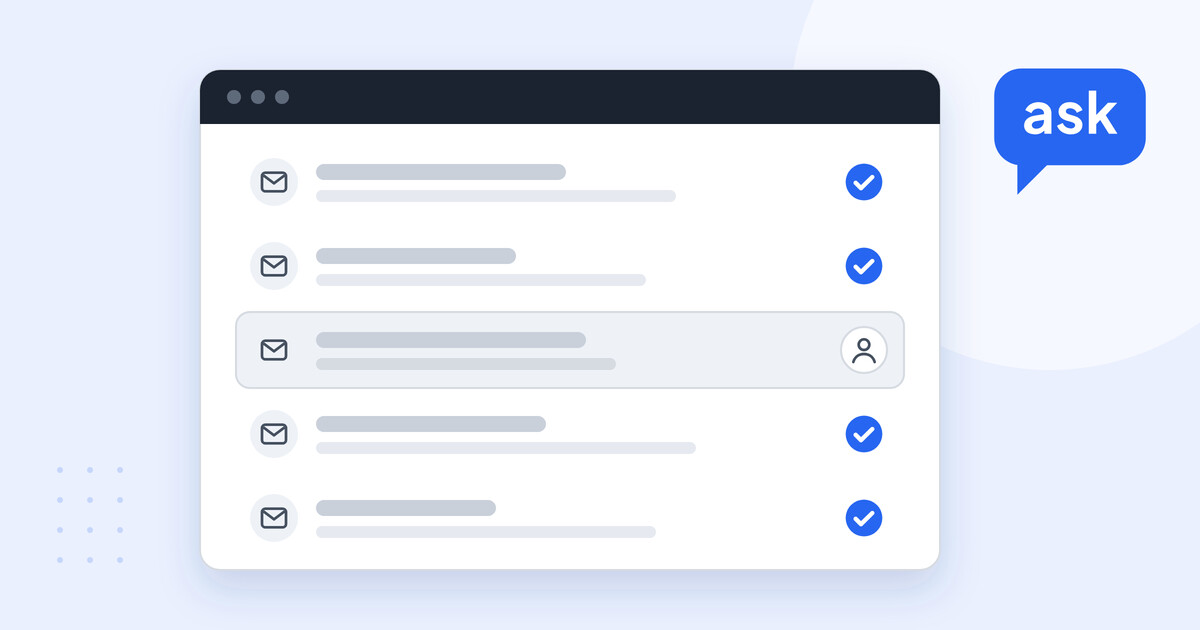
An AI agent for customer support is software that answers customer messages on its own – support emails, helpdesk tickets, chat and, in some tools, marketplace messages. It reads what the customer wrote, works out what they need, pulls the facts from the store’s systems (the order, the return policy, the product) and either sends a complete reply or takes the action itself: changes an address, cancels an order, starts a return. When a case needs a person, it hands it over with the context attached.
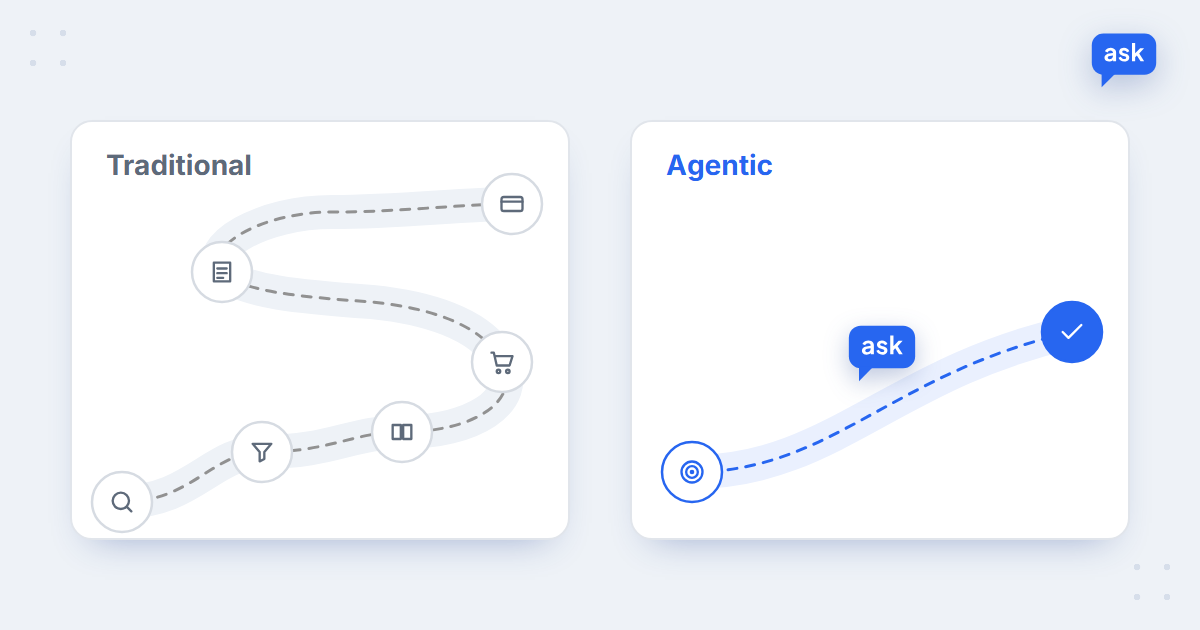
That is the difference from an older support chatbot, which matched keywords to canned answers and sent the customer to a help article – see how an AI agent differs from a chatbot. It is also a different job from a shopping assistant on the storefront: this comparison is about the support queue, mostly after the sale. If you are choosing a tool that sells as well, start with our comparison of AI chatbots for e-commerce. And if you want one that works inside the helpdesk you already run, that is what our own AI customer service Agent for e-commerce is built for – it is one of the nine below.
What an AI support agent handles in an online store
The support inbox of an online store is mostly about orders that already exist. In our own data from AskSpot stores, two in three support emails are post-purchase, and more than half arrive outside office hours:
66%
of support emails are post-purchase – orders, returns, complaints
AskSpot Internal Data · median store
53%
of support emails arrive outside Mon–Fri 9–17
AskSpot Internal Data · median store
33%
of support emails resolved by AI with no human
AskSpot Internal Data · median store
Those are medians across our clients’ stores for one month, from our e-commerce AI chatbot statistics – and the third number is lower than vendor headlines for a reason. A complaint or a damaged parcel often needs a decision only the store can make. What an agent can close depends on what it is connected to and which cases the store lets it close on its own. The work it takes off the queue looks like this:
- Order status – “where is my order?”, answered from the live order and the courier’s tracking, the question a store answers most.
- Returns, cancellations and address changes – done in the store’s systems, not just explained, where the tool has actions.
- Invoices, payments and delivery terms – policy questions answered from the knowledge base.
- Triage – tagging, setting priority, routing to the right team and filtering spam before a person opens the ticket.
- Handover – when a case needs a person, a summary and a suggested reply go with it, so the human handoff doesn’t start from zero.
How we compared these AI customer support agents
Every tool below was checked against its own public product, pricing and documentation pages, last in November 2026. We used the same 19-capability rubric as our chatbot comparison and pulled out the rows that matter to a support team: order handling, where the agent runs (its own helpdesk or yours), messaging and marketplace channels, grounding against made-up answers, self-learning, onboarding and languages. The “support capabilities” count next to each tool is the number of ticks it gets in those 10 rows. A tick means the vendor documents the feature, a tilde means it is limited or partial, a dash means it is not advertised. Prices are monthly list prices from the vendor’s page; where a vendor doesn’t publish one, we say so. AskSpot is our own product – we scored it on the same rubric, so read the table, not our adjectives.
The 9 best AI agents for e-commerce customer support
AskSpot – AI Inbox Agent that works inside your helpdesk

- Support capabilities: 8 of 10
- G2 Rating: 4.9 ★
- Pricing: €120/mo ($150) + €0.18 ($0.22) per resolved ticket, €0.05 ($0.06) per processed ticket; no per-seat fees – estimate your cost
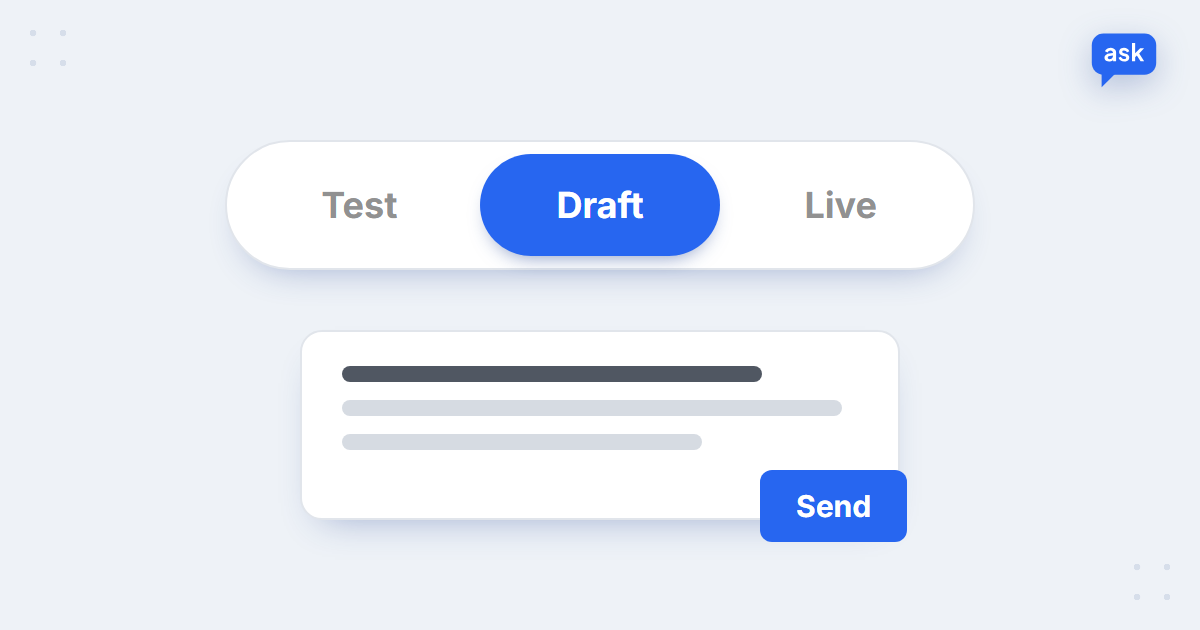
An AI agent that sits inside the helpdesk or inbox you already use – Zendesk, Freshdesk, Thulium, plain email – and inside the Allegro and Amazon message centres. It classifies and routes every ticket, answers from live order data and your knowledge base, and acts on the order: cancels it, changes the delivery address, starts a return. It goes live in three steps – a test mode where nothing is sent, drafts your team approves, then automatic replies on the queues you choose.
The same platform runs an AI Chat Agent on the storefront, so pre-sale chat and post-sale support can share one catalogue and one knowledge base.
Who it’s for: Online stores that want to keep their helpdesk and add AI to it – especially stores selling on marketplaces or in several countries.
Where it’s strong
- The only agent here with built-in Allegro and Amazon inboxes next to email and helpdesk queues
- Test and draft modes before anything reaches a customer; spam and unresolved tickets aren’t billed as resolved
- Published results: Meblobranie resolves 77% of support emails with AI, Mamabrum 51% across 20 languages
- 200+ languages; GDPR-compliant on EU-hosted infrastructure
Limitations
- Not a helpdesk itself – no macros, SLAs or agent seats of its own; you keep your helpdesk for that
- WhatsApp and Instagram channels are in progress
- A younger brand than the incumbents
Gorgias – AI Agent on an e-commerce helpdesk

- Support capabilities: 7 of 10
- G2 Rating: 4.6 ★
- Pricing: from €37 ($40)/month with the AI Agent, then ~€1.39 ($1.50) per extra AI interaction
The helpdesk many Shopify stores already run, with its own AI Agent built in. Because the agent lives in the helpdesk, order actions are first-class: refunds, cancellations, subscription edits and shipping changes, plus macros and rules for the team working next to it.
Who it’s for: Shopify and DTC stores that want helpdesk and AI agent from one vendor.
Where it’s strong
- Order actions built into the helpdesk – refunds, edits, cancellations
- Email, chat, social and SMS in one queue; 300+ integrations
- Priced on tickets and AI interactions, never per agent seat
Limitations
- Using the AI means moving your support onto Gorgias
- Each AI interaction also uses up a helpdesk ticket, so costs climb with volume
- No marketplace inbox for Allegro or Amazon
Full comparison: AskSpot vs Gorgias →
Zendesk – AI agents for the Zendesk helpdesk

- Support capabilities: 8 of 10
- G2 Rating: 4.3 ★
- Pricing: from €23 ($25) per agent/month; 5 AI resolutions per agent included, then €1.85 ($2.00) each pay-as-you-go or €1.39 ($1.50) committed
The default choice for larger support teams already on Zendesk. Its AI agents answer from the help centre, triage and route tickets, and come with the things a big operation needs: a sandbox to test changes, 80 languages, enterprise compliance and data residency. Every Support and Suite plan now includes AI agents for messaging and email.
Who it’s for: Larger support desks layering AI onto an existing Zendesk setup.
Where it’s strong
- Mature ticketing, triage, SLAs and reporting
- Sandbox to test changes before they go live
- Data residency and enterprise compliance
Limitations
- Built for every industry, not e-commerce first
- Order actions on Shopify need a custom API step; only 5–10 AI resolutions per agent are included, the rest is billed per resolution
Full comparison: AskSpot vs Zendesk →
Intercom Fin – AI agent billed per outcome

- Support capabilities: 9 of 10
- G2 Rating: 4.5 ★
- Pricing: €0.92 ($0.99) per outcome, on top of an Intercom seat from €36 ($39)/mo (€27 / $29 for new customers)
The strongest general-purpose support agent in this list. Fin resolves refunds, returns and address changes on its own, connects to Shopify, and can also run on top of other helpdesks – Zendesk, Gorgias, Salesforce, HubSpot and more – without an Intercom seat, with a minimum of 50 outcomes a month.
Who it’s for: Teams standardising on Intercom, or larger desks that want an outcome-priced agent on their current helpdesk.
Where it’s strong
- You pay per outcome, not per seat for the agent itself
- Autonomous refunds, returns and address changes
- Works on non-Intercom helpdesks too
Limitations
- Built for every industry, not e-commerce first
- An “outcome” includes handovers and routings as well as resolutions, so the bill is hard to forecast; seats are extra
- No marketplace inbox
Full comparison: AskSpot vs Intercom Fin →
Siena AI – AI customer-service agent for DTC brands

- Support capabilities: 6 of 10
- G2 Rating: 4.8 ★
- Pricing: from €695 ($750)/month + €0.83 ($0.90) per automated ticket; final price by quote
A support-first agent for Shopify brands that runs inside the helpdesk you already use – Zendesk, Gorgias, Gladly or Kustomer among them – and learns from your ticket history. It resolves refunds, address changes, return labels and replacements across email, chat and social – including Instagram and Facebook comments.
Who it’s for: Shopify DTC brands on a major helpdesk with a busy social inbox.
Where it’s strong
- Order actions end to end – refunds, address changes, return labels, replacements
- Instagram and Facebook comments, DMs and ad replies next to email and chat
- Learns from past tickets; named success manager
Limitations
- Order actions are documented for Shopify; supported languages are not listed on its current pages
- The €695 ($750) platform fee comes before the first ticket; onboarding is priced separately and there is no free tier or trial
Full comparison: AskSpot vs Siena AI →
Yuma AI – AI agent layered on your helpdesk

- Support capabilities: 7 of 10
- G2 Rating: 4.8 ★
- Pricing: from €13,300 ($14,400) a year – 12,000 resolutions (~€1.11 / $1.20 each), annual commitment paid upfront; first 30 days free
An agent that plugs into the helpdesk you already run – Gorgias, Zendesk, Kustomer, Gladly, Front or Re:amaze – and closes order status, returns, refunds, cancellations and subscription changes end to end on Shopify, WooCommerce and Magento. It goes live gradually: automatic on a small share of tickets, drafts for review on the rest.
Who it’s for: Shopify brands with steady, high ticket volume on a major helpdesk.
Where it’s strong
- Deep ticket automation across the major helpdesks
- Quality checks that send uncertain replies to a human
- 180+ languages; gradual rollout with drafts for the rest of the queue
Limitations
- Needs an existing helpdesk – it is a layer, not a helpdesk
- The entry plan is a yearly commitment of 12,000 resolutions, which suits steady volume more than a small or seasonal queue
Full comparison: AskSpot vs Yuma AI →
Zowie – enterprise customer-service AI agent

- Support capabilities: 6 of 10
- G2 Rating: 4.7 ★
- Pricing: custom / enterprise, per conversation (quote only)
An enterprise platform for retail and e-commerce with a strong focus on control: actions follow the store’s policies step by step, the same way every time, instead of being left to the model. It covers support and selling across chat, email and voice, with connectors to Zendesk, Salesforce, Kustomer, Freshdesk, Intercom and Gorgias.
Who it’s for: Enterprise retailers that need governed, auditable automation.
Where it’s strong
- Deterministic, policy-controlled actions
- 70+ languages across chat, email and voice
- Support and product recommendations from one platform
Limitations
- Enterprise contracts, no public rate card
- Helpdesk and inbox side lighter than the support-first tools
Full comparison: AskSpot vs Zowie →
Ada – enterprise CX AI agent

- Support capabilities: 5 of 10
- G2 Rating: 4.6 ★
- Pricing: custom / enterprise (~€28k / $30k a year and up, third-party estimate)
An enterprise customer-service platform with a strong voice story. For online stores it automates the post-purchase queue – tracking, returns and exchanges – across chat, email, messaging and phone, with compliance certifications large brands ask for.
Who it’s for: Large, compliance-heavy brands that want voice and chat support automation in one place.
Where it’s strong
- Voice agent with mid-call handover and full context
- SOC 2, GDPR and HIPAA; 60 languages in text, 42 in voice
- Order tracking, returns and exchanges
Limitations
- Connects to CRMs and helpdesks; little that is specific to shop platforms
- Quote only, with a budget sized for enterprise
Full comparison: AskSpot vs Ada →
eesel AI – AI teammate for the helpdesk you have

- Support capabilities: 4 of 10
- Pricing: free plan with 100 credits; from €277 ($299)/month for 500 credits, €462 ($499) for 1,000 – one ticket or chat = one credit, extra credits €0.74 ($0.80)
An AI agent you brief in plain English that plugs into Zendesk, Freshdesk, Intercom, Gorgias, HubSpot, Front, Help Scout or Salesforce. It answers, drafts and triages tickets, learns from your past tickets, and can be simulated on old tickets before it replies to anyone. On Shopify it looks up live orders and handles return requests, and a separate agent answers Amazon buyer messages.
Who it’s for: Teams that want to keep their helpdesk and try an AI layer cheaply, starting with a free plan.
Where it’s strong
- Works inside eight helpdesks; free plan, no card
- Simulation on past tickets and draft mode before going live
- 80+ languages, detected automatically; Amazon buyer messages
Limitations
- Built for any support team, not e-commerce first – refunds, cancellations and address changes aren’t documented for the self-serve plans
- Billed per ticket worked, resolved or not; agents pause when credits run out unless you enable overage
Before you ask which agent is best, decide whether you want to change helpdesk. Gorgias, Zendesk and Intercom work best if you move your support onto them; AskSpot, Siena, Yuma and eesel join the helpdesk you already have.
AI customer support agent comparison
The support rows of our rubric, side by side:
| Capability | AskSpot | Gorgias | Zendesk | Intercom Fin | Siena | Yuma | Zowie | Ada | eesel |
|---|---|---|---|---|---|---|---|---|---|
| Order tracking (WISMO), cancels & returns | ✓ | ✓ | ✓ | ✓ | ✓ | ✓ | ✓ | ✓ | ~ |
| Helpdesk / inbox agent (email, tickets) | ✓ | ✓ | ✓ | ✓ | ✓ | ✓ | ~ | ~ | ✓ |
| Full helpdesk suite (macros, SLAs, agent seats) | soon | ✓ | ✓ | ✓ | ~ | – | ~ | ~ | – |
| Social / messaging channels (WhatsApp, Instagram) | soon | ✓ | ✓ | ✓ | ✓ | ✓ | ✓ | ✓ | – |
| Marketplace inbox (Allegro, Amazon) | ✓ | – | ~ | – | – | – | – | – | ~ |
| Pre-sale product questions from the catalogue | ✓ | ✓ | ~ | ✓ | soon | ~ | ✓ | – | – |
| Grounded, low-hallucination answers | ✓ | ~ | ✓ | ✓ | ~ | ✓ | ✓ | ✓ | ✓ |
| Knowledge base | ✓ | ✓ | ✓ | ✓ | ✓ | ✓ | ✓ | ✓ | ✓ |
| Self-learning | ✓ | ~ | ✓ | ✓ | ✓ | ✓ | ~ | ~ | ✓ |
| Onboarding & human support | ✓ | ✓ | ✓ | ✓ | ✓ | ✓ | ✓ | ✓ | ~ |
| Languages (built-in) | 200+ | 80+ | 80 | 45+ | not listed | 180+ | 70+ | 60 | 80+ |
No tool wins every row. AskSpot is the only one with both Allegro and Amazon inboxes, but it doesn’t replace your helpdesk and its social channels are still in progress; the helpdesk vendors win on macros, SLAs and seats; the enterprise platforms on voice and governance.
How much does an AI customer support agent cost?
Each vendor charges for something different – an outcome, a resolution, an automated ticket, an AI interaction, a seat. Entry prices first:
| Tool | Entry price | What you pay for |
|---|---|---|
| AskSpot | €120/mo ($150) | €0.18 ($0.22) per ticket resolved without a human, €0.05 ($0.06) per processed ticket (draft, tagging, status change); spam not billed; no per-seat fees |
| Gorgias | from €37 ($40)/mo | Helpdesk plan with the AI Agent; ~€1.39 ($1.50) per AI interaction over the allowance, each also counted as a ticket |
| Zendesk | from €23 ($25) / agent/mo | Per seat, monthly; 5 AI resolutions per agent included (10 on Professional), then €1.85 ($2.00) each pay-as-you-go or €1.39 ($1.50) committed |
| Intercom Fin | €0.92 ($0.99) / outcome | A resolution, handover or routing, at most one per conversation, on top of an Intercom seat from €36 ($39)/mo (€27 / $29 for new customers) |
| Siena AI | from €695 ($750)/mo | Platform fee + €0.83 ($0.90) per automated ticket; final price by quote |
| Yuma AI | from €13,300 ($14,400)/year | 12,000 resolutions a year (~€1.11 / $1.20 each), annual commitment paid upfront |
| Zowie | quote only | Per conversation; its AWS Marketplace listing shows ~$34,500 a year for 25,000 conversations |
| Ada | quote only | Roughly €28k ($30k) a year and up, third-party estimate |
| eesel AI | from €277 ($299)/mo | 500 credits; one credit per ticket or chat the agent works on, resolved or not; €0.74 ($0.80) per extra credit; free plan with 100 credits |
To compare like with like, here is the monthly cost when the agent closes 1,000 and 2,000 tickets on its own:
| Tool | 1,000 resolved / mo | 2,000 resolved / mo | Model |
|---|---|---|---|
| AskSpot | €300 ($370) | €480 ($590) | Infrastructure + per resolved ticket; works inside your helpdesk |
| eesel AI | from €462 ($499) | from €786 ($849) | Per ticket worked (credits), not per resolution |
| Intercom Fin | ~€953 ($1,029) | ~€1,869 ($2,019) | Per outcome, incl. one Intercom seat |
| Yuma AI | ~€1,110 ($1,200) | ~€1,850 ($2,000) | Per resolution, annual commitment |
| Siena AI | ~€1,530 ($1,650) | ~€2,360 ($2,550) | Platform fee + per automated ticket |
| Gorgias | ~€1,635 ($1,765) | ~€3,025 ($3,265) | Pro plan + AI interactions over the allowance |
| Zendesk | ~€1,865 ($2,015) | ~€3,720 ($4,015) | One Support Team seat + AI resolutions pay-as-you-go |
| Ada | ~€2,315 ($2,500) | ~€2,315 ($2,500) | Enterprise, quote only – third-party estimate |
| Zowie | ~€2,660 ($2,875) | ~€2,660 ($2,875) | Enterprise, quote only – estimate from its AWS Marketplace listing |
Check what counts as billable. “Outcome”, “resolution”, “automated ticket” and “interaction” are not the same unit – some include handovers, some count every AI reply. Ask each vendor how spam and unresolved tickets are billed before you compare totals.
Gorgias vs Zendesk: which AI agent for an online store?
It’s the comparison most support leads end up making, because both are a helpdesk with an AI agent built in. Gorgias was built for e-commerce: Shopify order data sits in the ticket view, refunds and order edits are one click, and pricing follows ticket volume rather than seats. Zendesk serves every industry: deeper ticketing, SLAs, reporting and compliance, a sandbox for testing, but Shopify order actions need a custom API step, and beyond the 5–10 included per agent every AI resolution is billed (€1.85 / $2.00 pay-as-you-go).
Roughly: a Shopify store with a small-to-mid support team will usually be faster live on Gorgias; a larger operation with several departments, strict SLAs or compliance needs tends to land on Zendesk. If you already run one of them and don’t want to switch, an agent that layers on top – AskSpot on Zendesk or Freshdesk, Siena or Yuma on Gorgias and Zendesk – adds AI without a migration.
How to choose an AI agent for customer support
Six questions sort the list quickly:
- Keep your helpdesk or switch? If switching is off the table, shortlist the tools that work inside yours.
- Can it read and change orders? Ask for a live demo of a cancellation and an address change on your platform, not a slide.
- Which channels? Email and helpdesk tickets are standard; check social, WhatsApp and marketplace messages against where your customers actually write.
- Which languages? Every market you sell to, answered automatically.
- How does it go live? Look for a test mode and drafts your team approves before anything reaches a customer.
- What will a normal month cost? Put your ticket volume through each pricing model, and ask how spam, handovers and unresolved tickets are billed.
One more check: ask for the resolution rate and how it is measured. A ticket the agent replied to isn’t necessarily a ticket it resolved – the difference is explained in deflection vs resolution rate.
How to roll out an AI support agent safely
Whichever tool you pick, the rollout that works is gradual. Connect the order system and the knowledge base first. Then let the agent work on real tickets without sending anything, and read what it would have said. Next, switch to drafts: the agent writes, a person sends or edits. Only after that, turn on automatic replies for the queues where the drafts were consistently right – order status usually goes first, complaints last. Measure resolution and customer ratings each week and move a queue back to drafts if something slips.
Here is what the end state looks like for the most common question:
 spot
Try it on your own tickets
Book a short demo – we’ll connect AskSpot to your helpdesk and run it on real tickets in test mode.
Frequently asked questions
What is the best AI agent for customer support in e-commerce?
It depends on your helpdesk. If you’d rather move support onto one platform, Gorgias (built for Shopify stores) and Zendesk or Intercom (built for every industry) bring a helpdesk and an AI agent together. If you want to keep the helpdesk you have, AskSpot, Siena, Yuma and eesel add an agent on top – AskSpot is the one that also covers Allegro and Amazon messages. Ada and Zowie suit enterprise teams buying on a quote.
What can an AI customer support agent do for an online store?
It answers order status, delivery, return, invoice and policy questions from live data, and – where the tool has actions – cancels orders, changes addresses and starts returns. It also tags and routes tickets, filters spam and hands complex cases to a person with a summary attached.
How many support tickets can AI resolve?
On the median AskSpot store, 33% of support emails were resolved automatically in one month, and more than half on the best-performing stores. Email is harder than chat because complaints and damaged parcels often need a decision from the store. Treat a single “AI resolves 90%” claim with care and ask how resolution is measured.
Does an AI support agent replace my helpdesk?
Not necessarily. Gorgias, Zendesk and Intercom sell the agent as part of their helpdesk. AskSpot, Siena, Yuma and eesel work inside the helpdesk you already use, so your team keeps its queues, macros and reports while the agent takes the repetitive tickets.
Can an AI support agent replace live agents?
For the repetitive part, largely yes: order status, delivery, returns and product questions can be answered end to end, around the clock – on Shopify, WooCommerce or any other connected platform. It doesn’t replace the team. Complaints, damaged parcels and exceptions still need a decision from the store, so a good agent hands those to a person with the details already collected. On the median AskSpot store, 33% of support emails were resolved automatically in one month – so plan for AI plus a smaller team, not AI instead of one.
How much does an AI agent for customer support cost?
Models differ: per outcome (Intercom Fin, €0.92 / $0.99 plus a seat), per resolution on a yearly plan (Yuma), a platform fee plus a per-ticket charge (Siena, from €695 / $750 a month), helpdesk plans with AI interactions (Gorgias) or seats plus per-resolution AI (Zendesk, €1.85 / $2.00 pay-as-you-go), or credits per ticket worked (eesel, from €277 / $299). AskSpot is €120 ($150) a month plus €0.18 ($0.22) per resolved ticket – about €300 ($370) for 1,000 resolved tickets.
Can I check AI replies before customers see them?
Most tools offer some form of testing. AskSpot has three modes you switch in the panel: test (nothing is sent), drafts your team approves inside the helpdesk, and automatic replies on the queues you choose – and you can step back to drafts at any time.