Key takeaways
- Most store conversations are routine – product questions before the purchase and order questions after it – and those are what AI handles best.
- Automate in three tiers: what AI resolves end to end, what it prepares for your team, and what stays human from the start.
- Customers get frustrated by AI that can’t answer or won’t let them reach a person – not by AI as such.
- Judge the result by how many questions were actually resolved, not by how many conversations never reached a human.
What AI customer service means for an online store
In e-commerce, AI customer service usually covers two channels. The first is the chat on your website, where shoppers ask about products, sizes, delivery and their orders. The second is the support inbox – email, contact forms and marketplace messages – where most post-purchase questions land.
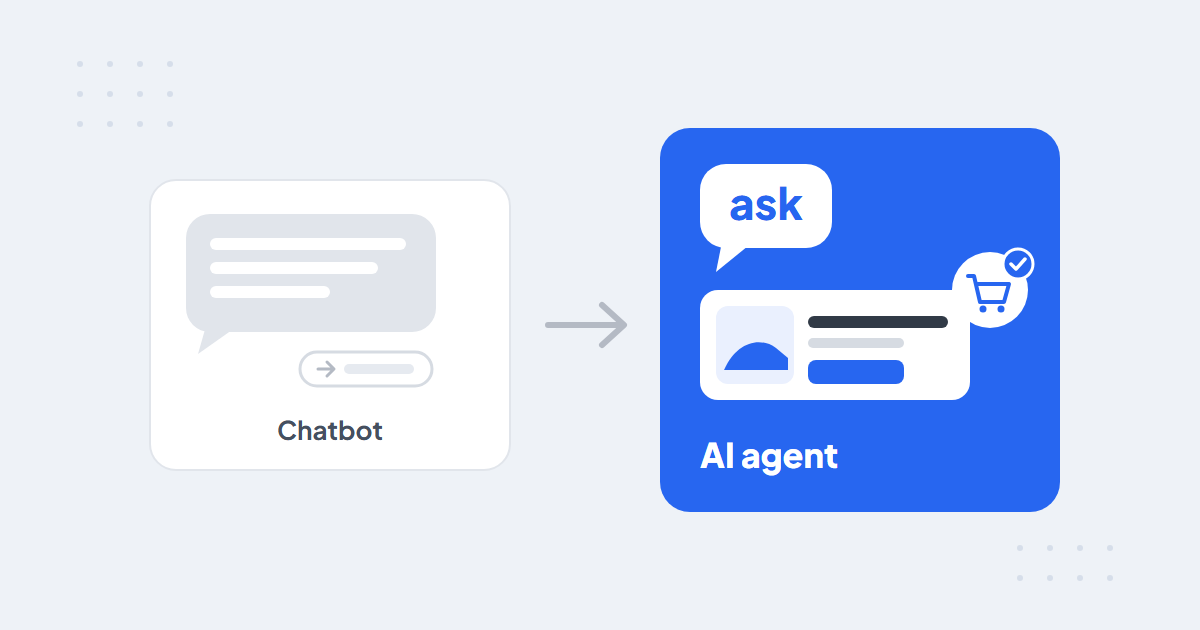
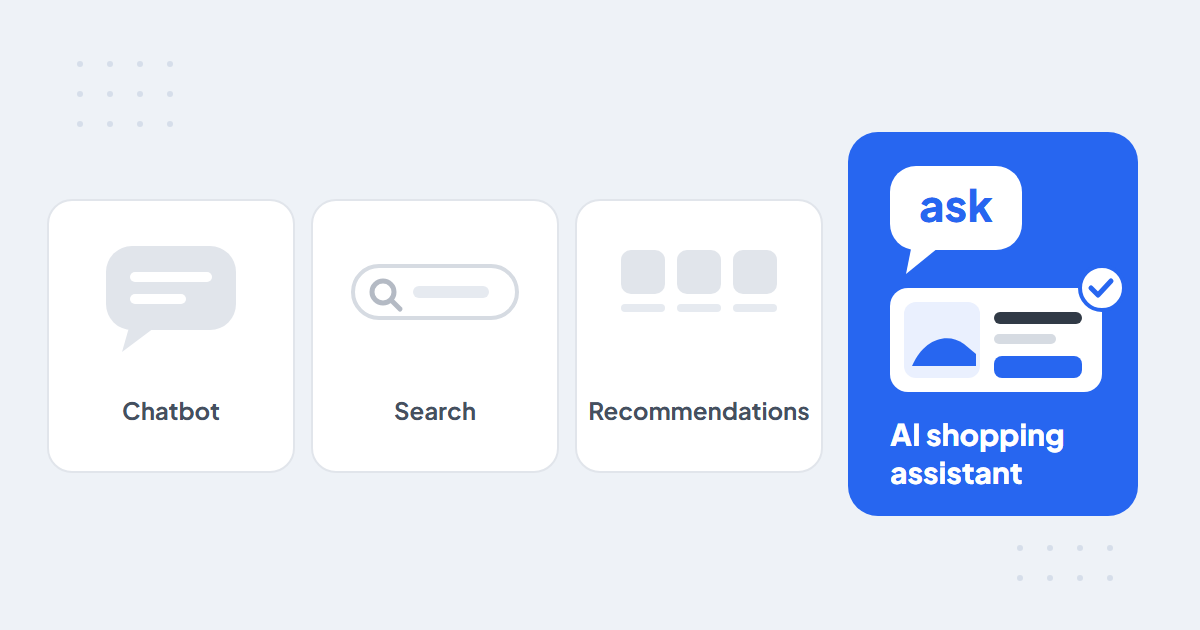
The tools behind it have moved on from scripted bots. Today’s AI agents understand free text, answer from your own catalogue and policies, look up the customer’s order and take the next step, such as collecting the details for a return. If the difference between a chatbot and an agent is new to you, start with AI agent vs chatbot: what’s the difference for an online store?
What customers actually contact an online store about
Before deciding what to automate, look at what comes in. Across more than 240,000 conversations handled by AskSpot’s agents in 15 e-commerce categories, three patterns repeat:
up to 90%
of chats in a category are pre-purchase questions
AskSpot Internal Data · 48 stores
~1 in 4
support contacts is just an order question
AskSpot Internal Data
56%
of conversations arrive outside 9–17
AskSpot Internal Data · 48 stores
Before the sale, shoppers mostly ask for help choosing: which model, which size, will it fit. After the sale, the same few questions dominate – where is my order, when will it arrive, how do I return it. And more than half of all conversations come in when a typical support team isn’t working, as we showed in 56% of your shoppers arrive after hours. That mix is why AI customer service pays off in e-commerce: the bulk of the volume is repetitive, specific and urgent to the shopper, but rarely needs a judgement call.
What to automate and what to keep human
Sort your contact reasons into three tiers. The line between them is simple: can the answer be given from your data and rules, or does someone need to decide?
| AI resolves end to end | AI collects, your team decides | Keep human |
|---|---|---|
| Order status, carrier and delivery date | Order changes and cancellations | Damaged or missing goods |
| Delivery options, costs and times | Starting a return or exchange | Disputed refunds and chargebacks |
| Return and warranty policy | Complaints that need evidence (photos, order number) | Upset customers who ask for a person |
| Product questions, specs and comparisons | Custom orders and B2B or bulk enquiries | Health, safety or legal advice |
| Sizing, fit and compatibility | Invoice corrections | Anything outside your written policies |
The middle column is where most stores lose time today. An agent can’t approve a cancellation on its own, but it can gather the order number, the reason and everything else your team needs, and forward one complete request – so nobody has to write back three times for the basics. The order tracking and handling feature works exactly this way: status questions are answered from live order data, changes are collected and passed on.
 spot
spotSee AI customer service on your own store
Book a short demo – we’ll show the Agent answering product and order questions from your catalogue and orders.
How to roll out AI customer service without losing customers
Shoppers don’t dislike AI. They dislike being stuck: a bot that answers the wrong question, loops on the same three options or hides the way to a person. A careful rollout removes those risks before a single customer sees the agent:
- Ground it in your own data. Products from your catalogue, policies from your own pages and Q&A in the knowledge base – not the model’s general knowledge.
- Test before it goes live. Every reply is checked automatically against your catalogue and rules, specialists challenge it with the hardest questions, and your managers try it end to end on a private staging environment.
- Start where the risk is lowest. Launch after hours first, or with the inbox before the chat, and widen it once you’ve read the conversations.
- Make the way to a person obvious. Write down which cases go to your team and let the agent hand over with the full conversation attached.
- Speak the customer’s language. If you sell abroad, the agent should answer in the shopper’s language from the same knowledge – see multilingual support.
Measure resolution, not deflection
Many vendors report a “deflection rate”: the share of conversations that never reached a human. It sounds like success, but it also counts every customer who gave up and closed the chat. The number that matters is the resolution rate – how many questions were actually answered or handled. Read a sample of conversations every week, check what was handed over and why, and judge the agent on resolved questions, satisfied customers and sales, not on how quiet your inbox got.
What stores get from AI customer service
Two published examples from stores running AskSpot on both the chat and the support inbox:
−90%
customer service costs
Morele.net · AskSpot Case Studies
90%
customer satisfaction level
Morele.net · AskSpot Case Studies
up to 77%
of support emails resolved end to end by AI
Meblobranie · AskSpot Case Studies
Morele.net, one of Poland’s largest electronics retailers, went from a 50-person support team to 5 with AI handling the chat, the inbox and marketplace messages. At Meblobranie, a garden furniture retailer, the inbox is mostly delivery logistics – dates, parcels, invoices – and routine tickets are answered end to end, while complaints and judgement calls go to the team. In both cases the people who stayed now handle the cases that need them.
How to choose an AI customer service tool
For an online store, check that a tool covers more than FAQs:
- Does it answer product questions from your catalogue, not only support questions?
- Can it look up live orders on your platform, and does it verify the customer first?
- Does it cover both channels – the website chat and the support inbox, including marketplaces?
- Can you set clear handover rules and test it before customers see it?
- Does it work in every language you sell in?
For side-by-side features and prices, see our comparison of the best AI chatbots for e-commerce and the head-to-head pages under AskSpot comparisons. AskSpot itself runs as two agents on one knowledge base: the AI Chat Agent on your site and the AI Inbox Agent in your helpdesk.
FAQ
Will AI customer service annoy my customers?
Not if it answers correctly and lets them reach a person when they need one. Frustration comes from bots that guess, loop or hide the human option. An agent grounded in your catalogue, orders and policies, with clear handover rules, gives most customers a faster answer than they would get by email.
Can AI handle returns and refunds?
It can explain your return policy and collect everything needed to start a return – order number, items, reason – and forward one complete request to your team. Approving refunds and handling disputes should stay with people.
Will AI replace my customer service team?
It takes over the repetitive questions, so a smaller team can focus on the cases that need judgement – complaints, exceptions, important customers. Stores usually keep people for those and for reviewing what the AI handles.
How much does AI customer service cost for an online store?
Most tools charge per conversation, ticket or resolution rather than per seat. AskSpot’s Chat Agent starts at €250 a month for up to 1,250 conversations, and the optional Inbox Agent adds €120 a month plus a small fee per ticket, with no setup fee – see pricing.
Does AI customer service work in other languages?
Yes. Modern agents answer in the customer’s language from the same knowledge base. AskSpot supports more than 200 languages, so one setup can serve every market you sell in.