Key takeaways
- More than half of all customer conversations arrive outside 9–17 – when most support desks are dark.
- Shoppers won’t wait: many abandon the purchase, or the brand, when a question goes unanswered.
- After hours splits into two journeys: someone still deciding (pre-sale, in chat) and someone chasing an order (post-sale, in the inbox).
- Each needs a different agent, and both run at the same cost whether it’s 2pm or 2am.
- Done well, it clears the overnight queue so your team starts the day on the exceptions, not the backlog.
When your shoppers actually show up
Look at when conversations actually land and the 9-to-5 assumption falls apart. Across the stores AskSpot runs on, 56% of all conversations arrive outside 9–17 – more than half, once you count evenings and weekends. A Monday-to-Friday, 9–17 desk is open for just 40 of the 168 hours in a week – under a quarter of them. So for three-quarters of the week, the shopper on your site who has a question is talking to no one.
That’s the real case for an AI agent that never clocks off: not to replace the desk, but to answer the majority of the week the desk was never open for. The traffic is already there – the evening browser, the weekend buyer, the shopper in another timezone – it just meets silence.
The shape is the same story in almost every store: a long, busy tail through the evening, a trough overnight, and a ramp that starts well before anyone opens the laptop. The desk covers the midday peak – and misses a second, quieter shift that never stops. By channel it’s the same picture – storefront chat runs even later, at 58% after hours, and the support inbox a touch earlier at 52% – but both are majority after-hours.
What making them wait actually costs
The problem isn’t just that questions pile up overnight – it’s that shoppers won’t wait for the morning. 53% of online adults say they’ll abandon a purchase if they can’t find a quick answer to their question, and 77% expect to interact with someone immediately when they reach out. At 9pm, “immediately” and “tomorrow at 9am” are both just “never” – the tab is closed, or the order has already gone to whoever did reply.
Staffing the gap with people doesn’t fix it, it just moves the cost: paying for later shifts across every language you sell in means covering the hours when volume is thinnest and least predictable. Coverage bought from headcount is linear – every extra hour of cover is another hour of wages – and the queue that still builds overnight lands on the morning team as a backlog before the day’s own volume has even started.
Compare your team’s cost per contact with AskSpot →
An after-hours question with no answer isn’t deferred to the morning – it’s usually lost. The sale, and often the customer, goes to whoever replied first.
After dark, there are two different journeys
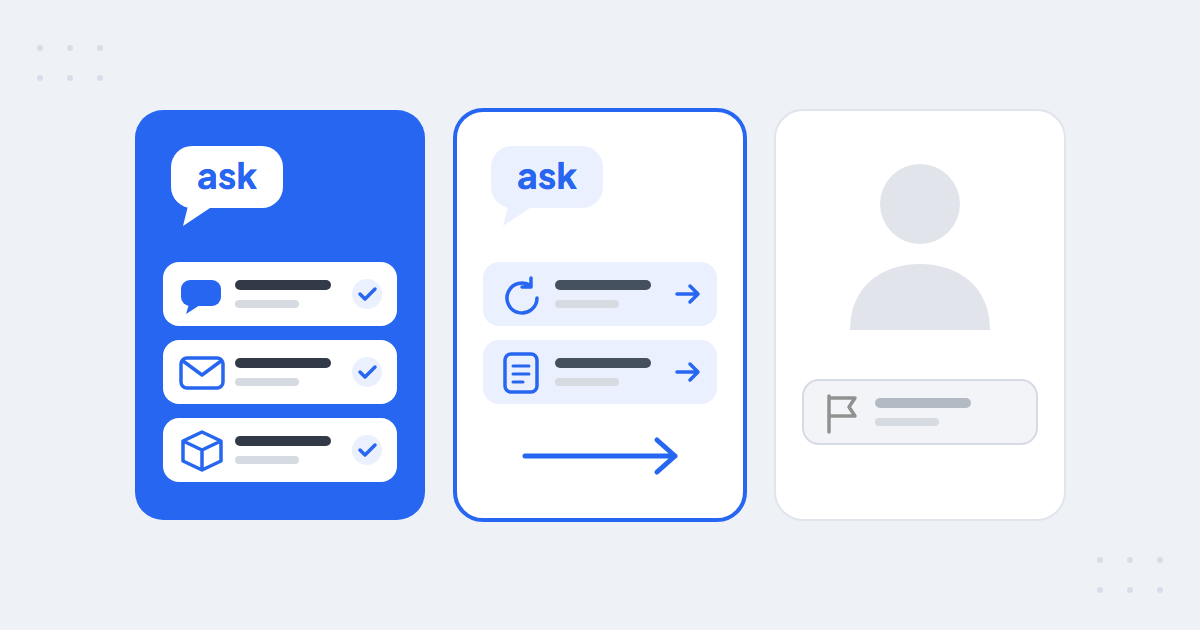
Not all after-hours traffic is the same, and treating it as one queue misses the point. Two very different people arrive at night: the shopper who is still deciding – comparing, sizing, checking whether it fits – and the customer who has already bought and wants to know where their order is. One is a sale you can still win; the other is a promise you have to keep.
They need different things, so AskSpot runs as two Agents: a Chat Agent on the storefront for the first, and an AI Inbox Agent for the second. And to be honest about what “handled” means – we report the real figure from the dashboard, around three-quarters of conversations resolved with no human on a typical account, not the “98%” some vendors quote by counting every deflection as a win. The rest is handed cleanly to your team, with the context already gathered.
Pre-sale: the shopper still deciding, in chat
The evening is when people finally have time to shop, and after-hours chat is the shopper who is still deciding – asking the questions they need answered before they’ll commit: “will this fit?”, “which one should I buy?”, “is it in stock?” Answered in the moment, they move down the funnel; left for the morning, the cart is already cold.
Followed through, that after-hours traffic is a funnel, not a dead end – and on a single store you can watch it convert. Take Konesso, a coffee retailer: 54% of its chats come in after hours, 29% go on to add an item to the cart, and 22% end in a purchase – at any hour of the night.
54%
of chats arrive after hours
AskSpot Case Studies
29%
go on to add an item to the cart
AskSpot Case Studies
22%
end in a purchase, day or night
AskSpot Case Studies
 spot
spotCover the hours you’re already paying for
Book a short demo – we’ll show AskSpot answering on products from your own store, any hour.
Post-sale: the customer chasing an order, in the inbox
The second journey is the one that piles up silently. Email and marketplace messages don’t stop at 5pm – more than half arrive after hours and simply queue until morning. The biggest thread in that queue is always the same: “where’s my order?” On marketplaces, 45% of conversations are post-purchase, and order-status leads every one of them – high-volume, low-complexity work whose answer already sits in your own order data.
Handled well, that overnight queue is largely gone by morning – answered in minutes, not the next working day. On one furniture retailer, up to 77% of support emails are auto-resolved in the inbox. The mechanics of doing it safely – verifying the shopper before it reveals anything – are their own topic; we cover them in how AI answers “where’s my order?”
52%
of support messages arrive after hours
AskSpot Internal Data
45%
of marketplace conversations are post-purchase
AskSpot Internal Data
up to 77%
of support emails auto-resolved in the inbox
AskSpot Case Studies
The morning team stops starting behind
You’re already paying for the after-hours traffic – the ad spend, the SEO, the storefront that stays open at 2am. Round-the-clock AI is what lets you actually answer it, on both journeys: the evening shopper gets help while they’re still deciding, the overnight order question is resolved before it becomes a backlog, and your team starts the day on the conversations that genuinely need a person – not on a pile of “where’s my order?” and “which one should I buy?” that could have been handled at midnight.
Repetitive questions no longer take up our advisors’ time, so they can spend it on the conversations that call for judgement and a human touch. Customers get accurate answers in the evenings and at weekends too, while our team’s working hours have stayed the same.
FAQ
Does 24/7 AI support actually resolve questions, or just deflect them?
It resolves them. We report the real figure from the dashboard – around three-quarters of conversations handled with no human on a typical account, not a headline “98%” that counts every deflection as a win. The rest is handed cleanly to your team, with the context already gathered.
Is this for storefront chat or the support inbox?
Both. A Chat Agent answers pre-sale questions on the storefront, and an Inbox Agent works your email or helpdesk queue – the same round-the-clock coverage across both channels, so the evening shopper and the overnight ticket are both handled.
Will it answer in my customers’ language after hours?
Yes. It replies in seconds, in the shopper’s language, on every market you serve – so an evening or weekend question is answered as it arrives, not the next morning.