Key takeaways
- An AI shopping assistant turns a need described in plain language into a specific product recommendation – and, increasingly, into a filled cart.
- Shopper-side assistants (general AI tools) answer from the whole web; store-side assistants answer only from one store’s catalogue.
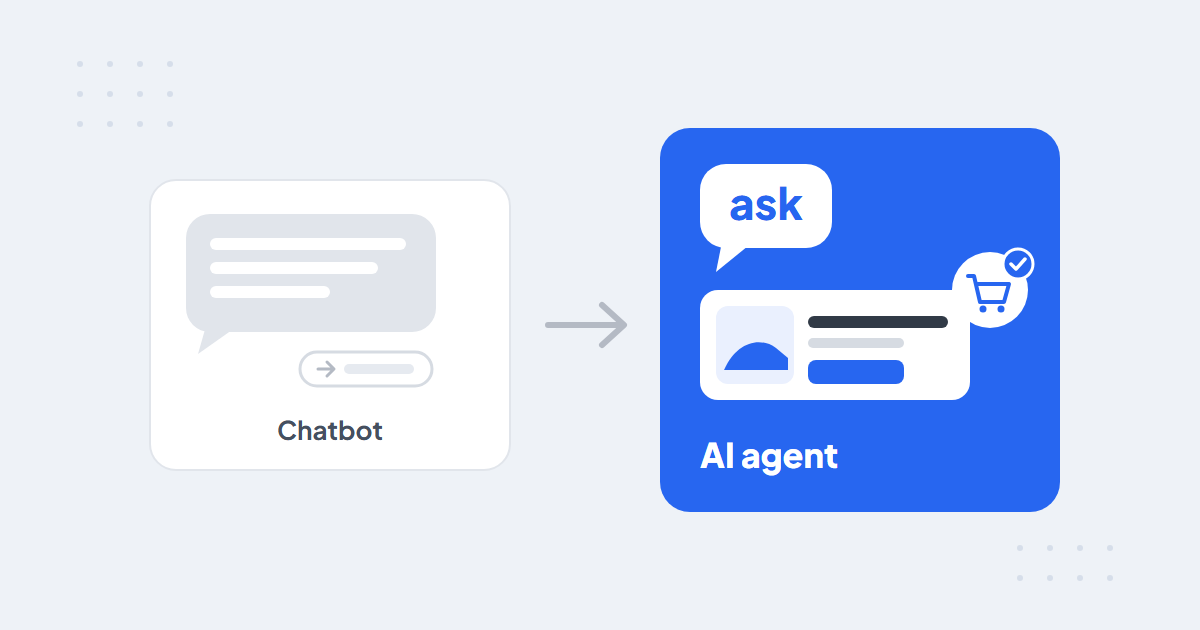
- A store-side assistant goes beyond a support chatbot: it asks follow-up questions, compares products and can act on the page for the shopper.
- The right tool depends on your platform, your markets and whether you also need support automation in the same agent.
What is an AI shopping assistant?
An AI shopping assistant is software that uses a large language model to help someone choose and buy products in a conversation. The shopper describes what they need in their own words – “running shoes for a half marathon, wide feet, under €150” – and the assistant asks what it still needs to know, then recommends specific products, compares them and answers questions about size, delivery or returns.
It is one form of conversational commerce: selling through a dialogue rather than through menus, filters and a search box. The difference from older chatbots is that the shopper doesn’t have to know the right keyword or attribute name. The assistant works out the intent and maps it to the catalogue.
Two kinds: assistants for shoppers and assistants for stores
When people search for an AI shopping assistant, they mean one of two things. Some mean the general AI tools they use to shop – ChatGPT, Perplexity, Google’s AI Mode or Amazon’s Rufus. In Adobe’s survey of 5,000 US shoppers, 38% had already used generative AI to shop. Others mean an assistant a store puts on its own site, trained on that store’s products. The two work very differently:
| Shopper-side assistant | Store-side assistant | |
|---|---|---|
| Examples | ChatGPT, Perplexity, Google AI Mode, Amazon Rufus | An assistant embedded on the store’s own website |
| Answers from | The whole web, or one marketplace | Only that store’s catalogue, specs and policies |
| Works for | The shopper, across every store | The store and its shoppers |
| Where the sale happens | Wherever the shopper is sent | On the store’s own product page and cart |
| Who controls the answers | The AI provider | The merchant |
For a merchant, both matter, but only the second one is yours to run. Why it pays to keep the conversation on your own catalogue is covered in our guide to AI product discovery on your own store. The rest of this article is about store-side assistants.
What a store-side AI shopping assistant does
A store-side AI shopping assistant does the job of a good salesperson on the shop floor, in a chat window on every page. A capable one covers these tasks:
- Understands the need in plain language, including size, budget, compatibility and use case.
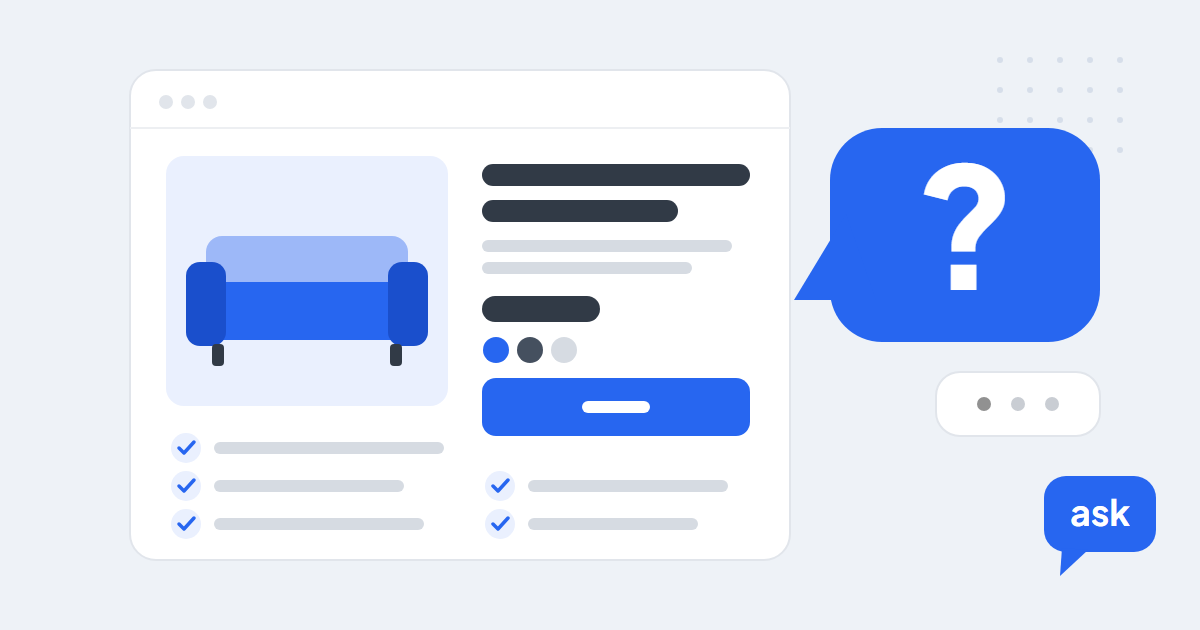
- Asks follow-up questions when the answer depends on the shopper’s situation.
- Searches the catalogue by meaning, not by exact keyword, and shows matching products in the chat.
- Compares and recommends – which of two models suits this shopper, and why.
- Suggests add-ons that genuinely fit the product being bought.
- Acts on the page – filters a category, adds an item to the cart, fills in checkout details – up to the payment the shopper confirms.
- Answers pre- and post-sale questions about delivery, returns and order status.
- Works around the clock and in the shopper’s language, across every market you sell in.
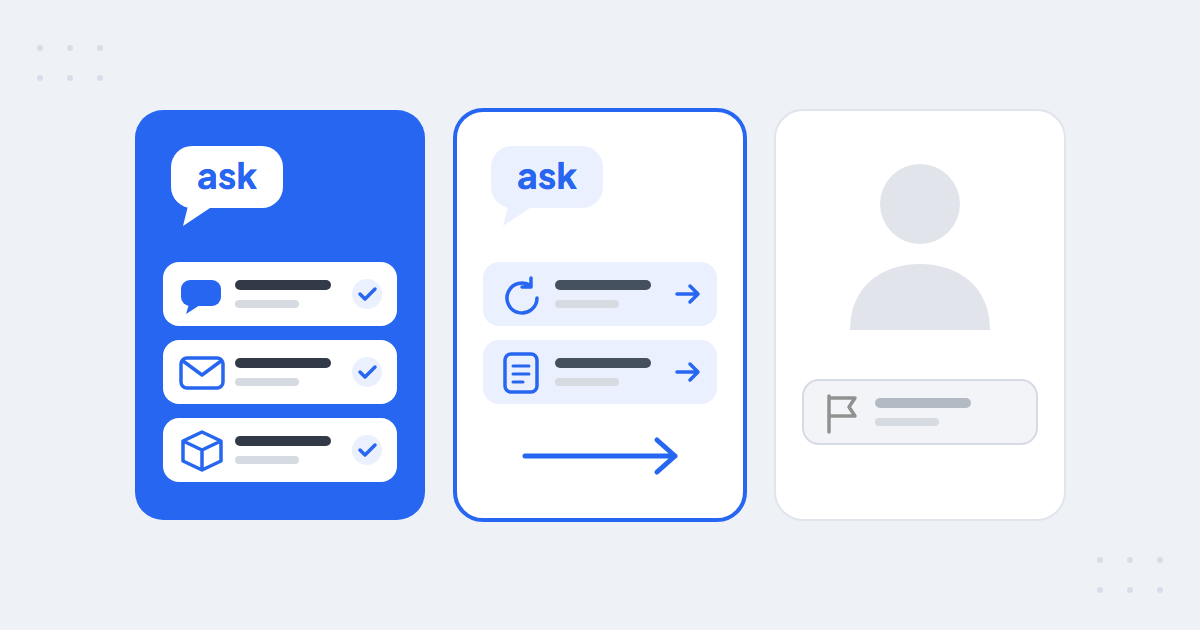
- Hands over to a person when the question isn’t one it should answer.
The step from “answers” to “acts” is the newest part. AskSpot’s AI shopping assistant, for example, navigates, filters, adds to cart and fills the checkout for the shopper, by text or voice, and stops at the payment the shopper confirms. Everything it recommends comes from the store’s own catalogue, synced daily by default.
 spot
spotSee an AI shopping assistant on your catalogue
Book a short demo – we’ll show the Agent recommending and adding products from your store.
AI shopping assistant vs. chatbot, site search and recommendation engine
An AI shopping assistant overlaps with three tools most stores already have, but it isn’t a replacement label for any of them. The differences come down to who leads the conversation and whether the tool can sell:
| What it does | Where it stops | |
|---|---|---|
| Support chatbot | Answers FAQs and order questions, often from scripted flows or a help-centre knowledge base | Usually can’t advise on products or compare them |
| Site search | Finds products that match the words typed | Needs the right keyword; can’t ask what the shopper means |
| Recommendation engine | Shows “you may also like” products based on behaviour | Can’t take a question or explain why a product fits |
| AI shopping assistant | Holds a conversation, asks follow-ups, recommends and compares from the catalogue, and can act on the page | Hands over to a person for questions it shouldn’t answer |
In practice the line between an “AI chatbot for e-commerce” and an AI shopping assistant is drawn by one question: can it recommend products from your catalogue and help the shopper buy, or does it only answer support questions? Many tools now do both in one agent.
Does an AI shopping assistant actually sell?
Shoppers use a store’s chat mainly to buy, not to complain. Across more than 240,000 conversations in 15 e-commerce categories handled by AskSpot’s AI Chat Agent, pre-purchase questions are the majority of chat in most categories, and the most common of them are requests for help choosing, specs and fit. When those questions get a specific answer, a large share of conversations end in a sale:
240,000+
shopper conversations across 15 e-commerce categories
AskSpot Internal Data · 48 stores
up to 90%
of chats in a category are pre-purchase questions
AskSpot Internal Data · 48 stores
up to 21.6%
of chats end in a purchase
AskSpot Case Studies
Pre-purchase questions reach 90% of chat in garden and outdoor, and 86–87% in furniture and automotive. The 21.6% is Konesso, a specialty coffee store, where shoppers ask which beans suit their taste or which filter fits their machine. That is a purchase rate among shoppers who chatted, not the store’s overall conversion rate. Why these questions block the sale on a normal product page is covered in high-converting product pages: the question most guides skip.
The best AI shopping assistants for e-commerce stores
These are store-side tools that position themselves as AI shopping assistants or shopping agents, based on their own public product pages (checked September 2026). Each is strongest in a different situation. For full feature tables and pricing across 11 tools, see our comparison of the best AI chatbots for e-commerce.
1. AskSpot – selling and support in one agent
AskSpot’s Chat Agent advises from the store’s catalogue and acts for the shopper – filtering, adding to cart and filling the checkout by text or voice – and its Inbox Agent handles support email and marketplace messages. Best for: stores that want product-aware selling and support from one vendor, across many languages and markets.
2. Alhena – agentic assistant for Shopify-first brands
Alhena finds products from shoppers’ natural-language needs, shows shoppable cards, adds the chosen variant to the cart and moves the shopper into checkout. Best for: Shopify-first DTC brands looking for an all-round agentic assistant. AskSpot vs Alhena →
3. Rep AI – sales-led agent for Shopify
Rep AI turns search queries into guided buying, lets shoppers add products and proceed to checkout within the chat, and detects exit risk to recover sessions. Best for: Shopify stores that want a sales-first agent with revenue attribution. AskSpot vs Rep AI →
4. Zowie – enterprise agentic commerce
Zowie recommends from the brand’s real catalogue and merchandising strategy, adds to cart, and handles order questions in the same conversation. Best for: enterprise brands that want deterministic, policy-controlled agentic commerce. AskSpot vs Zowie →
5. Gorgias Shopping Assistant – sales on top of a helpdesk
Gorgias adds a shopping assistant with upsells and bundling to its e-commerce helpdesk, next to AI that handles order tracking, returns and FAQs. Best for: support-heavy stores already running Gorgias as their helpdesk. AskSpot vs Gorgias →
6. Smartsupp Mira – budget assistant for EU stores
Smartsupp’s Mira AI recommends products from the store’s inventory, suggests cross-sells and up-sells, and hands over to a human operator under conditions you set, inside a live-chat tool. Best for: smaller European stores that want live chat plus an advisory AI on a budget. AskSpot vs Smartsupp →
7. Octane AI – product quizzes rather than chat
Octane AI guides shoppers through no-code product quizzes and lets them add the results to the cart. It isn’t a conversational assistant, but it solves the same “help me choose” problem with a fixed set of questions. Best for: Shopify stores that want product quizzes and zero-party data.
How to choose an AI shopping assistant
Shortlist tools by asking each vendor the same questions:
- Does it answer only from your catalogue, and how often is the catalogue synced?
- Does it work with your platform – Shopify, WooCommerce, Magento, PrestaShop or a custom build?
- Can it act – add to cart, start checkout – or only recommend?
- Does it speak every language and market you sell in?
- Does it also handle support – order status, returns, email – or will you need a second tool?
- Can you see the revenue it influences, and test it on your own products before you commit?
FAQ
What does an AI shopping assistant do?
It helps a shopper choose and buy through conversation: it understands a need described in plain language, asks follow-up questions, recommends and compares products, answers questions about size, delivery and returns, and – in newer tools – adds items to the cart or fills in checkout details for the shopper.
What are the top AI shopping assistants?
It depends on whose side you’re on. Shoppers use general tools such as ChatGPT, Perplexity, Google’s AI Mode or Amazon’s Rufus. Stores use on-site assistants such as AskSpot, Alhena, Rep AI, Zowie, Gorgias Shopping Assistant or Smartsupp Mira, each strongest in a different situation – see the list above.
Can AI do my shopping for me?
Partly. Some AI shopping assistants can now search, compare, add products to the cart and fill in checkout details, but the payment itself is still confirmed by the shopper. On a store’s own site, an assistant like this works only with that store’s products.
Is an AI shopping assistant the same as a chatbot?
No. A support chatbot mostly answers FAQs and order questions. An AI shopping assistant advises on products from the catalogue, asks follow-up questions and helps the shopper buy. Many current tools combine both in one agent.
Will a store’s AI shopping assistant recommend products it doesn’t stock?
Not if it is grounded in the store’s catalogue. A grounded assistant answers only from the store’s own products, synced from its product feed, so it can’t suggest a competitor’s item. When the store doesn’t carry what the shopper asks for, it offers the closest product it does have.