Key takeaways
- Product discovery is becoming a conversation with an AI, not a scroll through filters – and shoppers are already doing it.
- A general AI answers from the whole web – it can recommend a rival or describe a product you don’t stock.
- An AI grounded to only your catalogue keeps the shopper, the recommendation and the sale on your store.
- Retailers running their own shopper agents are already growing faster than those who leave it to outside AI.
- This is different from being “mentioned” by ChatGPT – it’s owning the AI advisor on your own turf.
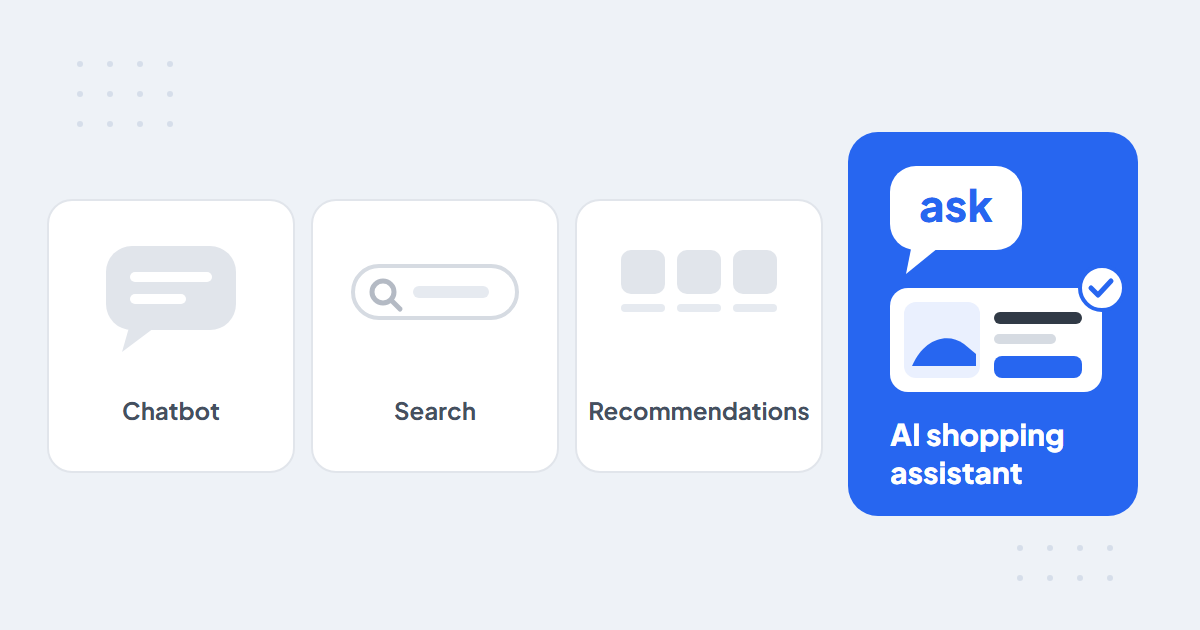
Product discovery is moving to AI
For years, “which one should I buy?” was answered by scrolling filters, reading a dozen reviews, or opening ten tabs to compare. Increasingly it’s answered by asking an AI in plain language. The shopper types the need – “a quiet dishwasher for a small kitchen”, “an SSD that fits a PS5” – not a SKU, and expects a straight recommendation back.
This isn’t a forecast – it’s already how people shop. In Adobe’s survey of 5,000 US shoppers, 38% had already used generative AI to shop and 53% used it for product research, and gen-AI referral traffic to retail sites rose sharply through 2025. This is conversational commerce: instead of filters, the shopper describes a need and expects the right product back – an AI shopping assistant built for e-commerce turns that “help me choose” into a specific pick from your range, backed by AI product search over your own catalogue. The shift is underway – the real decision is where the conversation takes place.
38%
of US shoppers have already used generative AI to shop
Source: Adobe
~70%
average cart abandonment, barely changed in a decade
Source: Baymard
20%
of 2025 holiday online sales were AI-influenced – about $262B
Source: Salesforce
Shoppers who don’t get an answer just leave
The reason so many shoppers now ask an AI is that the alternative is guesswork. Around 70% of carts are abandoned, a figure that has barely moved in over a decade – and the biggest barrier to buying online isn’t price, it’s uncertainty. A shopper who can’t tell whether a part fits, a size runs small, or a machine takes the right filter doesn’t email support and wait. They close the tab.
Our own numbers say the same thing from inside the chat. Across the stores AskSpot runs on, “help me choose” advice is consistently the single biggest pre-purchase topic, and nearly half of all shopping conversations happen outside 9–17 – when there is no one on the shop floor to answer at all. The demand for a straight answer is there every hour of the day. The question is who gives it.
The biggest barrier to buying online isn’t price – it’s uncertainty. Whoever answers the “which one?” question first tends to win the sale.
What happens when that conversation leaves your store
The pull toward outside AI is real and strong. Salesforce found that over the 2025 holiday season, traffic to retailers from tools like ChatGPT and Perplexity doubled year over year and converted 8–9× better than social – these are high-intent shoppers, close to a decision. The problem isn’t the intent. It’s that when the shopper asks a general assistant instead of your store, three things you don’t control happen at once.
- It answers from the whole web, so it can just as easily name a competitor as name you.
- It can quote a spec, a price or an availability that isn’t yours – or invent one.
- Win or lose, the shopper is on someone else’s surface – not on your product page, one tap from your cart.
A general AI has no reason to keep the sale on your store. Its job is to answer the question – not to sell your catalogue.
Isolate it: an AI shopping assistant grounded to your catalogue
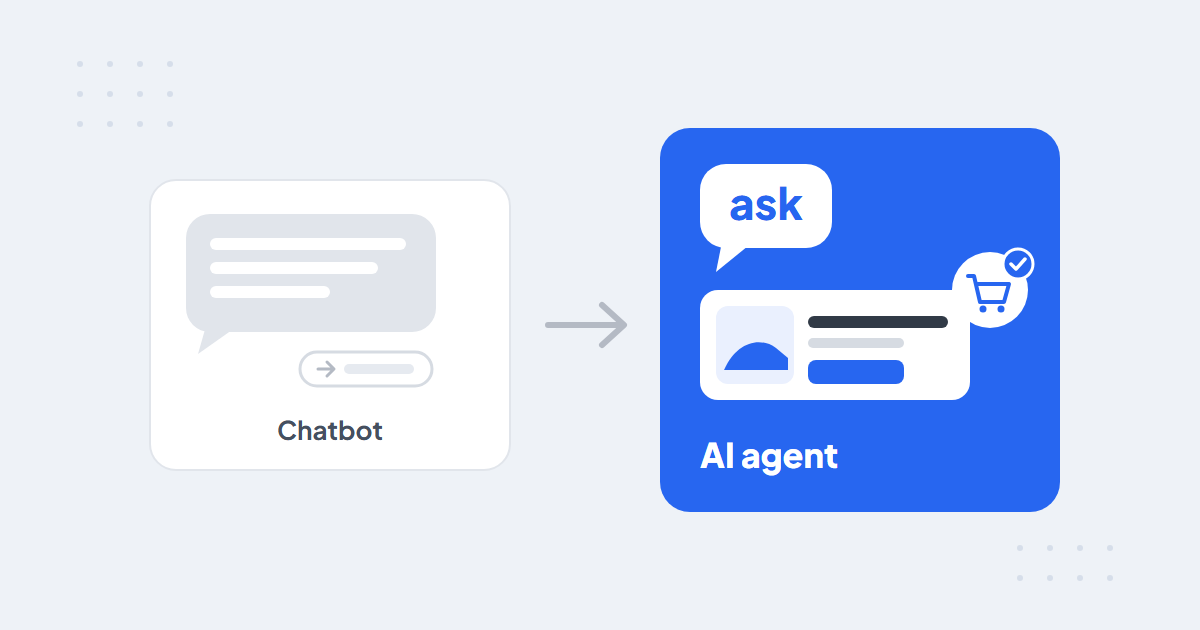
The answer isn’t to fight AI product discovery – it’s to run it yourself, on your own catalogue. An AI shopping assistant grounded to your store answers only from your products, your specs, your stock status and your policies. Ask it for something you don’t carry and it offers the closest thing you do. It can’t recommend a rival and it can’t invent a product, because it has nothing else to draw on.
“Grounded” here means scope, not live inventory: the Agent works from a regular sync of your catalogue – daily by default, more often on some setups – so every recommendation is something you actually sell – not a guess from the open web. That single constraint is what turns an AI from a liability into a salesperson who only ever points at your shelves. The same grounding is why it can be trusted to talk to every shopper without a script: it is boxed into what you know to be true about your own range.
 spot
spotSee this on your own catalogue
Book a short demo – we’ll show AskSpot answering from products in your store.
Why owning the AI on your store pays
This isn’t only a defensive move. In the same 2025 holiday data, Salesforce reported that retailers running their own shopper agents grew sales 59% faster than those who didn’t. Keeping the discovery conversation on your store, on your catalogue, is where the growth is showing up – not in hoping an outside model mentions you.
On your store, the answer is instant and in context: no tab-switching, and the recommendation sits one tap from the cart. It’s there when your team isn’t, it replies in the shopper’s language, and every answer points at a page you own. And, kept on your catalogue, it converts – because a confident shopper who was just shown the right product is a shopper who buys.
44%
of shopping conversations happen outside 9–17, when no one is on the shop floor
AskSpot Internal Data · 53 stores
up to 32%
of pre-purchase chats are “which one should I buy?” advice
AskSpot Internal Data
up to 21.6%
of chats end in a purchase
AskSpot Case Studies
See it in practice: Konesso turned product questions into a 21.6% purchase rate, and on Senetic’s B2B IT store 19.5% of chats add to cart and 8.1% buy – both on the store’s own catalogue, in the shopper’s language.
What on-store AI product discovery should do
Not every on-site chat widget is a real AI shopping assistant. If you’re weighing one up, these are the things that decide whether it sells from your catalogue or just chats:
- Grounded to only your catalogue – it recommends your products, never the open web.
- Synced to your feed regularly – daily by default, more often when a store needs it – so specs, prices and stock stay current to your range.
- Answers in the shopper’s language, on every market you sell in.
- Available 24/7 – it covers the after-hours half of demand your team can’t.
- Routes every recommendation to your own product page, one tap from the cart.
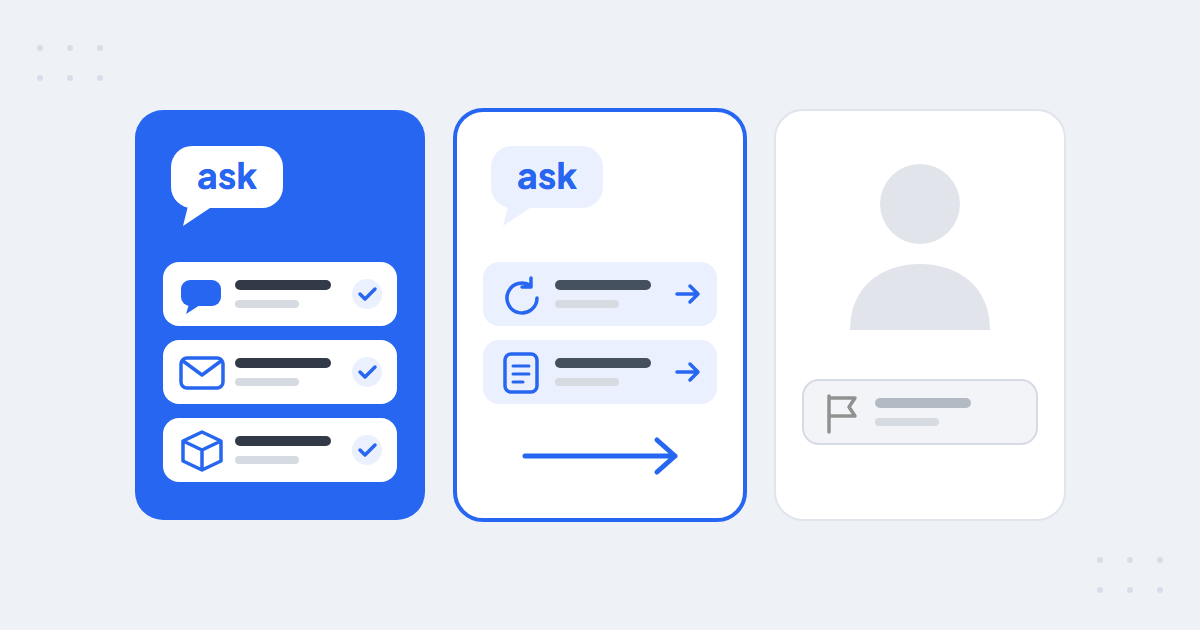
- Hands off to a human cleanly when the question isn’t one it should answer.
This isn’t “get cited by AI” – it’s owning the AI on your own turf
There’s a lot of advice about optimising your store to be mentioned by ChatGPT or Perplexity. It’s worth doing, but it’s a different game: it tries to win back a shopper who has already left your store to ask someone else. Owning the AI advisor on your own store keeps them from leaving in the first place – the discovery conversation, the recommendation and the checkout all happen on a surface you control, from a catalogue you own.
The traffic from outside AI will keep growing, and you should capture what you can of it. But the shoppers already on your store are the ones you don’t have to win back – as long as the AI that meets them there is yours, and answers from your shelves.
Being cited by an external AI wins you a mention. Owning the AI on your store wins you the sale.
FAQ
Will an AI on my store send shoppers to competitors?
No. An AI grounded to your catalogue answers only from your products, so it recommends what you sell and nothing else – it has no competitor catalogue to draw on. That’s the difference from a general assistant, which answers from the whole web and can name a rival as easily as it names you.
Is the AI limited to my product catalogue?
Yes – that’s the point. It draws on your products, specs, stock status and policies. Ask it for something you don’t carry and it offers the closest thing you do stock, rather than inventing a product or pointing off-site.
Does it use real-time stock and prices?
By default it syncs your catalogue once a day, so specs, prices and availability are current to the last sync rather than live to the second – and for some stores the sync can run more frequently. “Grounded” describes scope – it stays inside your own range – rather than real-time inventory.