Key takeaways
- Product recommendations come in three kinds: rule-based widgets, behavioural personalization and recommendations in conversation.
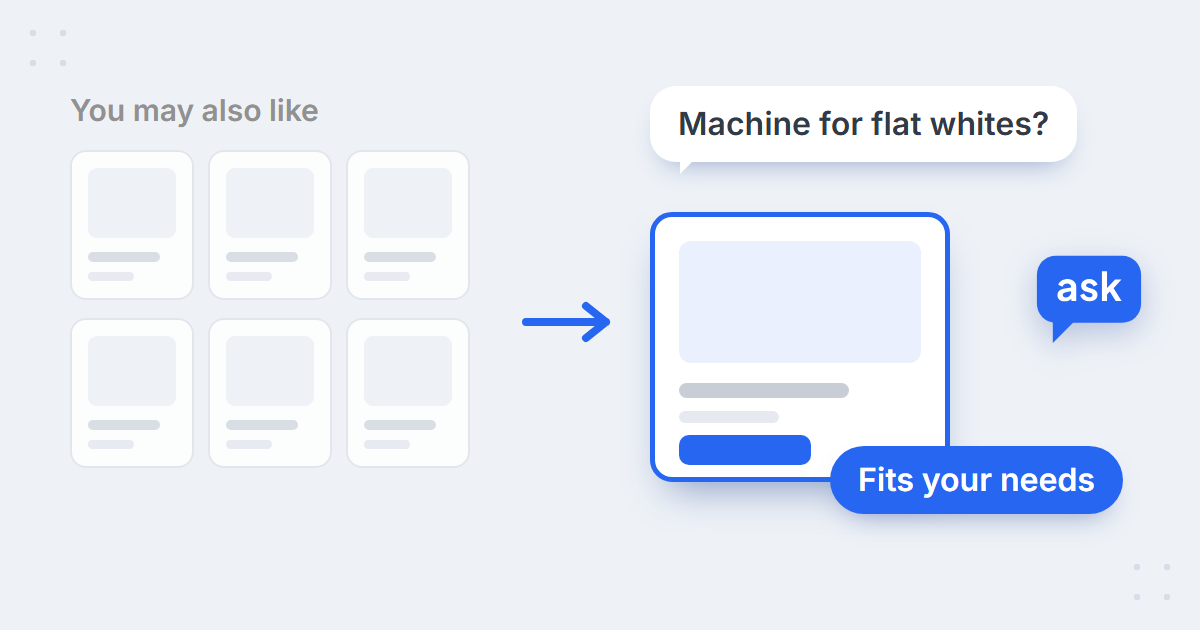
- Widgets and engines guess from behaviour; a conversation asks the shopper and can explain why a product fits.
- Personalizing on what the shopper says works for a first-time visitor too – no browsing history needed.
- You steer what gets recommended with rules, and the AI only recommends what’s in your catalogue.
- Measure per conversation, not per recommended product.
What are AI product recommendations?
AI product recommendations are product suggestions chosen by a model rather than by a fixed rule – based on what a shopper browses and buys, on what similar shoppers did, or on what the shopper says they need. In an online store they show up as “you may also like” rows, personalized home pages, cart suggestions and, more and more, as recommendations inside a chat.
The goal is the same as a good salesperson’s: put the right product in front of the shopper at the right moment. The difference between the approaches is how they decide what “right” means.
Three kinds of product recommendations
| Based on | Where it shows | Strong at | Where it stops | |
|---|---|---|---|---|
| Rule-based widgets | Bestsellers, “frequently bought together”, manual picks | Product page, cart, home page | Simple cross-sell, easy to set up | The same for every shopper |
| Behavioural personalization | Browsing and purchase history, similar shoppers | Rows and emails tailored per shopper | Returning shoppers with a history | Weak for first-time visitors; can’t say why |
| Recommendations in conversation | What the shopper says they need, plus your catalogue | Chat on the product page, search and cart | Considered purchases, fit and compatibility | Needs a shopper who asks or answers a question |
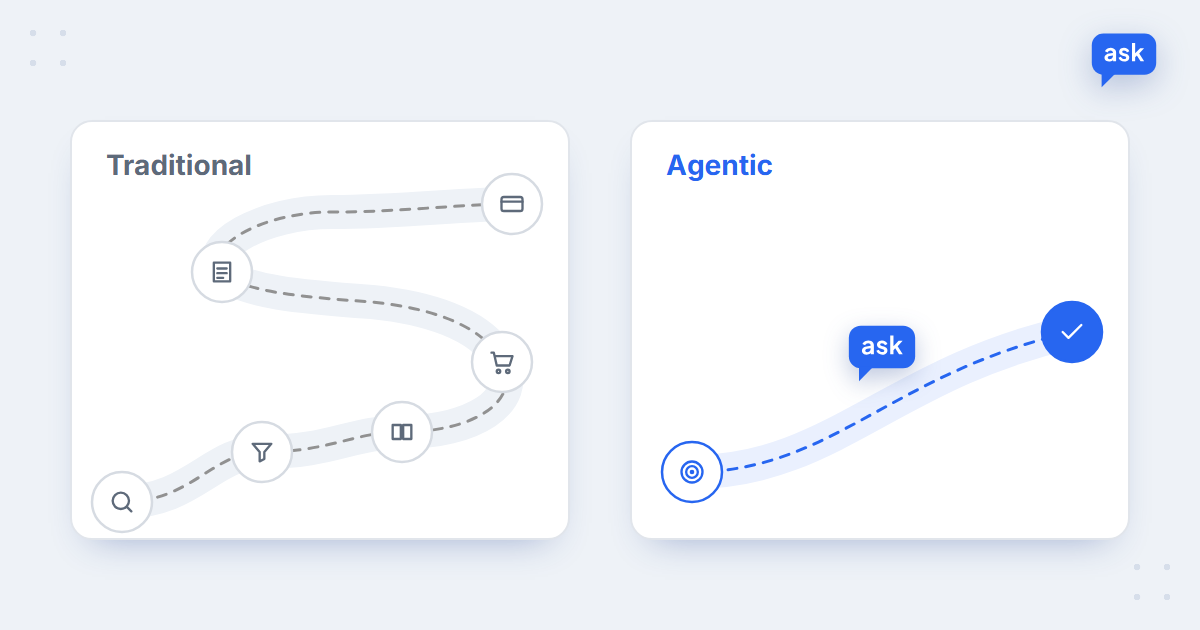
The first two infer what the shopper might want. The third asks – which is why it can recommend for a situation no click history describes: “a gift for a 7-year-old who likes science”, “a sofa bed for a studio flat”.
Personalized product recommendations without tracking
Most personalization depends on history: the more a shopper has browsed and bought, the better the suggestions. That leaves out the shopper who matters most – the first-time visitor deciding whether to buy at all. A recommendation in conversation is personalized on what the shopper tells you right now: the use, the size, the budget, the model it has to fit. It works on the first visit, and it doesn’t need a profile built from tracking.
For returning shoppers, the agent can also see a short summary of their earlier conversations, so it doesn’t start from zero.
How conversational recommendations work
In an AI chat agent for e-commerce, a recommendation follows the same path every time:
- A question. The shopper describes the need – or the agent asks, if something is missing.
- A recommendation with the reason. One or two products from your catalogue and why each fits, found by meaning rather than keywords (AI product search).
- Product cards. Image, rating, price and key specs, with “Show similar” and “To cart” buttons, so the shopper can compare and buy without leaving the chat.
- The matching extras. Accessories that fit the chosen product – the cross-sell, made at the moment it’s useful. In the cart, a proactive message can offer them too.
 spot
See recommendations on your own catalogue
Book a short demo – we’ll run the Agent on products from your store and show what it recommends.
Leading a shopper through questions to the right product is a discipline of its own – more in guided selling in e-commerce.
Steering what gets recommended
A recommendation is only as good as the rules behind it. Three controls matter:
- Recommendation rules. Short rules for which products, brands or categories to suggest first, which accessories go with what, and how to advise – for example, ask about the room size before recommending a sofa.
- Your catalogue only. The agent recommends from your product feed, so it never suggests something you don’t sell. The feed syncs daily by default, so new products and prices reach the recommendations without manual work.
- A plan for out-of-stock. When the product the shopper wants is unavailable, the agent offers the closest one in stock – automatically on the out-of-stock page, too.
How to measure product recommendations
Measure per conversation: of the chats where the agent recommended something, how many ended in a click on a recommended product, how many added to cart and how many ended in a purchase. Measuring per recommended product punishes the format – a carousel of six products with one click is a hit, not five misses. In published AskSpot case studies:
58%
of chats with a recommendation end in a click, at a furniture store
AskSpot Case Studies
56%
at a sports supplements store
AskSpot Case Studies
48%
at a terrarium and exotic pets store
AskSpot Case Studies
The stores are Edinos, SFD and GadziSklep. Then read the chats that didn’t convert: a recommendation nobody clicked usually points to a missing product, missing data in the feed or a rule worth changing.
A recommendation the shopper understands gets clicked. “Because you need it for a studio flat” beats “customers also bought” every time.
Personalization engines vs conversational recommendations – or both
A personalization engine is the software behind “recommended for you” blocks, personalised search results and tailored emails: it learns from browsing and purchase history and changes what each visitor sees. For online retail, the most effective personalization engines are the ones with plenty of history to learn from – returning customers, large traffic. What they can’t do is ask the shopper what they need today.
You don’t have to choose one. They cover different shoppers:
- Widgets and engines are enough for impulse buys, small catalogues and returning shoppers who browse – “frequently bought together” does its job.
- Conversation wins for considered purchases, products that have to fit and large catalogues where the shopper can’t compare everything.
- Most stores need both: widgets on every page, a conversation where the shopper hesitates.
When you compare tools, check that recommendations come from your own catalogue, can be steered with rules, explain why a product fits, lead to the cart, and are measured per conversation. For an overview of the tools themselves, see what an AI shopping assistant is and our roundup of e-commerce AI chatbots.
FAQ
What are AI product recommendations?
Product suggestions chosen by a model rather than a fixed rule – based on browsing and purchase history, on similar shoppers, or on what the shopper says they need. They appear as product rows, cart suggestions and recommendations inside a chat.
How do personalized product recommendations work?
Behavioural engines personalize on what a shopper has viewed and bought. Conversational recommendations personalize on what the shopper says right now – the use, the size, the budget – so they also work for a first-time visitor.
What is the difference between a recommendation engine and an AI chat?
A recommendation engine shows products based on behaviour, without a question. An AI chat asks what the shopper needs, recommends from your catalogue and explains why a product fits. Most stores use both: the engine everywhere, the chat where shoppers hesitate.
How do you measure product recommendations?
Per conversation: the share of chats with a recommendation that end in a click on a recommended product, the share that add to cart and the share that end in a purchase.
Do AI product recommendations need customer data?
Behavioural personalization does – it learns from browsing and purchase history. Recommendations in conversation work from what the shopper says and your product catalogue, so they don’t depend on a tracked profile.
What is a personalization engine in e-commerce?
Software that changes what each visitor sees – recommended products, search results, emails – based on their browsing and purchase history. It works best with returning customers and plenty of traffic; a conversation covers the shoppers it knows nothing about yet.